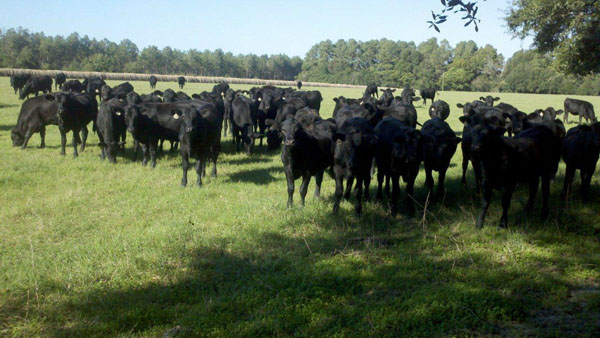
Wednesday, February 27, 2013

The Showman - Myron Saathoff

Today we welcome another feature from our friend Brittni Drennan Communications Coordinator for the International Brangus Breeders Association. Meet Myron Saathoff a true showman! He began showing cattle in FFA and his career in the ring continues today.


Myron Saathoff enters the show ring grasping a lead rope in one hand and a show stick in the other trailing a line of perfectly fitted Brangus heifers. At the other end of the halter, Pearl glides alongside Saathoff following his directions. After getting set, Saathoff anxiously awaits the judge’s selection, knowing his heifer is bound to receive the prized purple banner.

Saathoff has stepped foot into many show rings over the last 40 years and is no stranger to the winner’s circle. He initially began showing heifers and steers in high school through FFA while growing up in Hondo, Texas. Now after two back surgeries, one hip replacement, and countless ribbons and awards won, Saathoff is unsure of how many more times he will be able to return to the show ring.

The earlier account was one of the most memorable moments of Saathoff’s show career. Pearl was the offspring of a champion that Saathoff bred and raised at JLS, Pearl’s dam, Tally, was awarded Show Heifer of the Year in 2003-2004, winning three of four major shows that year. Pearl was named International Champion and Show Heifer of the Year in 2009. The very next year, Tally had another daughter, Kelly, who was also an International Champion.

“I like being able to work with show cattle and demonstrate what you’re breeding and what you’re producing,” Saathoff explained. “It’s a way to advertise and showcase your operation to the public and showcase your best cattle.”


Upon graduating from high school, Saathoff attended Texas Lutheran College in Seguin, Texas, on a baseball and football scholarship and finished at Texas State University in San Marcos, Texas. He then began working at the local auction barn where his father worked before transitioning to the ranch management sector. He first worked for Larry Blackman of B2B Farms at 20 years old. He got involved in showing again this time in open shows. It was at B2B farms that Saathoff used Big Sir 75/6 and Justana 40/8 as clean up bulls, two of the Brangus foundation sires of today. Big Sir was the grand sire of Titan, who was the sire of Transformer, Big Sir also sired General, one of the maternal foundation sires of the breed. Justana was the foundation sire of Robert Vineyard’s 100 family. Both of these bulls can be found somewhere in most pedigrees popular today.

After working for B2B Farms, Saathoff managed several other operations including Escoba, T Diamond, Star J Ranch, and Star Creek Ranch owned by Curly Taylor where all the Brinks 392 progeny was developed. Saathoff tried his hand in sale management and consulting before settling in at JLS International owned by Jeff Smtih located near Devine, Texas. Now almost 13 years later, Smith and Saathoff together have more than 70 years of experience in the Brangus seedstock business.

Saathoff has built an outstanding reputation breeding numerous champion heifers and bulls. To date, JLS is the only operation to win the Futurity three times. JLS was also recognized as the IBBA Breeder of the Year in 2007, and Saathoff has been honored as Herdsman of the Year twice. However, Saathoff still has goals for the operation and feels like he still has more to learn.

“I’m still going. Nobody has produced a perfect animal yet, but we’re getting closer,” Saathoff said. “Show animals and breeding stock are becoming more similar and are looking more alike than they did several years ago.”

With approximately 550 head of cattle plus bulls and heifers, JLS is still expanding and trying new techniques. Having obtained the most desirable cattle and some of the best performance cattle in the industry, Saathoff’s primary goal now is to improve genetic consistency in the registered herd. In order to achieve that goal, JLS recently generated five cloned heifer calves from the original 915C cow. Saathoff said the only way to tell them apart is by their ear tag number, and they even came into heat within three days of each other without using synchronization. Saathoff attributes the 915C cow for contributing to the success JLS has experienced over the last 13 years with last year marking 115 descendants from the 915 family.

JLS is also expanding their operation to include red Brangus cattle and now have seven red Brangus females. Saathoff showcased their red Brangus program in the show ring last year and received Red Brangus Show Heifer of the Year. JLS has implemented a breeding up to Brangus program in order to introduce new genetics and avoid line breeding. When it comes to genetic selection, Saathoff knows what to look for, and the success JLS has had is a testament to the extensive knowledge and experience he has gained.

When selecting cattle and making breeding decisions, Saathoff’s number one priority is performance. He wants a bull that can work in the South Texas climate and tough, rugged environment, which is the ultimate reason why he likes the Brangus breed.

“I’ve had experience with Angus, Brangus, Braunvieh, and from experience, Brangus by far out did everything as far as adaptability,” Saathoff said. “Brangus were the most fertile and had the best performance and best milking ability across the board.”


Saathoff said infusing Brangus into a herd will improve milking ability and mothering ability, and he compliments the Brangus female for being the best in the industry. He believes Brangus can improve the beef industry with the breed’s tremendous adaptability qualities as long as purebred breeders produce bulls the commercial man needs and can use. The biggest challenge Brangus breeders face involves marketing.

“They need to believe in the product they are producing and market their own product,” Saathoff said. “If you believe in what you have and are knowledgeable about your program, you can sell it.”

Saathoff said it was important for the Brangus breed to obtain more accurate data and genetic markers in order to improve consistency within the breed, but also to improve the market and increase the demand for Brangus cattle. With the constant change in marketing trends, Saathoff is still trying to learn new tricks.

“I definitely still have room to learn more about marketing and how those trends have changed,” Saathoff said. “The Internet is one really good tool that I need to learn more about.”

Saathoff said he follows examples by others who were successful marketers like Glen Brinkman and Joe Reznicek, who were both very involved and knowledgeable about their respective programs, but the Internet is a marketing tool breeders can easily take advantage of. It is accessible to everyone from businessmen to cattlemen, and all it takes is getting the information out there to the people who are looking for it, and Saathoff is one who continually looks for opportunities to keep growing.

“If you’ve got the information in front of them, you’ve got a better chance of selling them something,” Saathoff said. “Like live Internet auctions are an area that we can grow in, and it’s beneficial because people can view and buy cattle without travelling.”

Saathoff’s new goal for JLS is simple- to keep improving by increasing consistency. Maybe Saathoff is slowing down, but he is not done yet. He and his wife, Neva, are supporters of the junior association, IJBBA, and Saathoff said he enjoys watching juniors show his cattle as much as he liked showing. He likes the opportunity to give youth the experience they might not otherwise have been able to enjoy. Having two children who grew up involved in the IJBBA, Tanessa Sawyer and Tate, Saathoff knows how beneficial the youth organization is.

After 41 years in the cattle industry, Saathoff knows how to seek out and take advantage of the opportunities before him. He has made a name in this business and created a reputation built on integrity, and his reputation alone is what markets his cattle, selling close to 200 bulls on the ranch each year.


“Honesty is what has made JLS successful,” Saathoff said, “and everyone is treated the same regardless of experience in the breed or business.”

Among a library full of memories made in the show ring, Saathoff recalls another memorable moment in 2004 when the National Western Show was first hosted in Phoenix, Ariz. That year, JLS brought back both big prizes of Grand Champion Heifer and Grand Champion Bull. Another outstanding memory was in 2003 when JLS won Grand Champion Heifer at the Futurity for the third time by the same breeder. This third win allowed Saathoff to be the first person to take home the Brangus Futurity trophy engraved with all the past Futurity winners. This trophy had previously been displayed at the IBBA office and is now proudly displayed at JLS.

Saathoff is a true cattleman and showman!

Thanks Brittni for bringing us this great feature! To meet more Brangus producers check out their webpage, blog and Facebook page.

How are you involved in agriculture? We want to hear your story! Contact us a foafeature@gmail.com for more info about being the next feature!

Friday, February 1, 2013

Small Town Girl - Rosie Sanderson

Today we welcome small town girl and farm kid Rosie Sanderson who shares her family's proud farming history and tells her story with the hope of educating others about farming and agriculture. 

If I told you I grew up in a town with a population of 48, you would probably assume that I grew up with that typical “small town girl” story… and you would be correct. Anything you can think of to insert into a small town girl story could probably be applied to my childhood: I learned how to drive a Super M tractor before I learned how to drive a car, I crashed a go-kart or two into my dad’s grain bins, I spent my summers showing cattle, was constantly begging my parents for a horse (which I still haven’t gotten, by the way), and I had decided by age 4 that I was going to be a veterinarian when I grew up!

I was raised on a livestock and grain farm in northern Illinois. (No, not all of northern Illinois is Chicago! Population 48, remember?) My dad farmed with his dad and brother, so I was lucky enough to grow up with my dad, uncle, and grandpa at our farm every day. When I was little, we always had pigs out on the pasture at our house. I can remember riding out to the pasture in the truck with my dad to check the piglets, but he always made me stay in the truck (much to my dismay) because sows are very protective.

My brother Trent and I checking pigs with dad.
As I got older, our farm shifted from pigs to cattle. I got my first bucket calf when I was 7, and I was in love! I named her Wise-Guy (don’t ask me why, I don’t get it either). To this day, my grandpa tells the story about how sick my Wise-Guy got when she was just a small calf, and how I would lay in her calf hutch and sleep with her because I didn’t want her to be alone. As an experienced livestock farmer, of course my grandpa thought “Great, she is going to get attached to this calf and it’s not going to survive.” Well, she did! In fact, she is the cow that started what is now our herd of over 50 cattle. 15 years later, she is still on pasture at my parent’s farm. 

Me with my 15-year-old cow Wise-Guy.
With the help of Wise-Guy, I started showing cattle in 4-H when I was 8 and continued to show calves from our farm until the summer of 2008 when I moved to central Illinois to attend Illinois State University. Moving to college was a huge change for me. Not because it was away from home, family, friends, and grandma’s cookin’… but because these people had no clue about anything agriculture!

As soon as people found out I was an agricultural animal science major, the first question was always “Wait, you are from a REAL farm???” I thought to myself “Who are these people and where did they come from!” Where I grew up, everyone I knew was another farm kid. I had never met anyone that hadn’t seen a cow before. I thought I must have met the only people on this earth who had never been to a farm. People would ask me about chocolate milk coming from brown cows, brown eggs being healthier than white, if cow-tipping was a real thing… and all I could do was laugh! Were these people serious?

As I made my way through college and met more people, I realized that this wasn’t an exclusive group of people who had never been exposed to farming. In fact, I began to feel like the weird one because I HAD experienced these things first-hand. I started to realize that people wanted to know about farming, but they didn’t know where to go for the information. They didn’t have access to farming like I did growing up. This was a problem, and it was here that my passion for discussing farming and food production with farmers and urban folks alike. So I quit laughing when people asked me what I thought were silly questions, because I was their closest connection to farming. If they couldn’t ask me about these things, where did I expect them to go for their answers? 

My family in front of the house in Norway that our ancestors
left 170 years ago!
In 2011, my family had the amazing opportunity to travel to Norway and go to the farm that our ancestors left in 1843. We feel so lucky that we got the experience to stand in the house that they lived in and explore the farm that they left to bring us to where we are today. Farming has been in the family for longer than record books have been around! It is hard to wrap your head around how far we have come but how much has stayed the same, too.

I still have some cattle on pasture at my parent’s farm today, but I hope to move them to my own farm someday, just like all of my ancestors have done. When I have my own farm, I know that I will take with me the important lessons that I learned growing up on our family farm; including the importance of sustainability. Both crop and livestock production are jobs that come with a responsibility to conserve the environment, and that is a responsibility that my family has always taken seriously. Today our farm is more sustainable than ever with the help of new technologies. If that interests you, you can learn more about what we do at our farm’s website: www.sandersonag.com. In 2010, our farm even received an award for Illinois Soil & Water Conservation Family of the year from Orien Samuelson!

My family receiving a conservation award from Orien Samuelson.
One thing I wish people understood about my farm family is that we want to answer your questions! Farming is our livelihood, our history, and our passion. We take pride in what we do. If you have a question about agriculture, why not go straight to the source and ask a farmer?

I love what I do, and I think most farmers would say the same thing if you asked them. I feel so blessed to have been raised in “God’s Country” where I learned the importance of hard-work, responsibility, and most recently the importance of sharing what I know with people like you! 

Riding my mare, one of the many perks of living in the country!
If you ever have a food-production related question but don’t know where to start, visit my blog, Unpolished Boots, or facebook page and ask me! I will always be happy to answer your questions or get you in contact with someone who can!

Thank you Rosie for the fantastic feature! Remember - if you or someone you know is involved in farming, ranching, or the agricultural industry and would like to share your story here please contact us! YOU could be the next Face of Agriculture! 

Friday, January 18, 2013

Josie - Wyoming Cowgirl

Today we welcome a young lady from Wyoming. Meet Josie! She enjoys living and working on the ranch!


Hi everyone! I am Josie, also known as the Hillbilly Goddess of my blog, “Wild & Wooly”. I am 16 years young & live on a ranch out in the boonies of northeast Wyoming. I have a huge passion for agriculture, horses, and rodeo. We raise purebred commercial Black Angus cattle as well as American Quarter Horses, with Hancock/Driftwood bloodlines. My job on the ranch is to do anything that needs done, to the best of my ability. Whether that’s, cleaning corrals, making brownies, changing tires, or playing fetch, I’m able.

Me, getting on colt – Photo credit: Kate Tracy

Most of the year you can likely find me horseback; either, breaking and training colts, checking water, moving cows, or at a barrel race. Whatever the case may be, I love riding! I currently have 3 horses that I’m working with – a 5 year old brown gelding, Ranch Style Beans; a 2 year old dun gelding, Giddy Up Go Reno; and a blue roan yearling, Rock N Roll Roni. You can say I stay busy. I love the progress I see day-to-day when breaking a colt. It’s one of the most frustrating and patience-trying things I have ever done, but it is also one of the most rewarding and fulfilling. I hope to continue to break, train, and compete for as long as I live.

My dad and I at chute – Photo Credit: Kate Tracy

I am homeschooled, and love it! I went to public school my 3rd grade through the start of my freshman year of high school. Now, a junior, I clearly see that homeschooling is a tremendous blessing pretty much every way I look at it. It has given me such a great opportunity to pursue my talents and interests! Math comes easiest to me, so it would have to be my favorite subject. I also enjoy accounting and business math, which I know will benefit me for the rest of my life. Homeschooling has also given me a greater opportunity to not only be of help on our ranch (and my grandparents’ ranch, who live about 20 minutes away), but to learn many things that the public school system may not ever discuss.

Our dog Gem herding a cow - Photo Credit: Josie 

My other found loves include photography and working out; neither I did before starting homeschooling. Photography is something I know I will be able to enjoy for the rest of my life. There is so much to learn, but I am getting a lot better and expanding my knowledge every time I take pictures of a different subject. I am thankful to live in such a place that I am able to take pictures of a wide variety of material.

I like to describe myself as an endorphin junkie. I love to work out. It’s a high! I enjoy Beachbody’s P90X andTurboFire. Insanity is next on the list to try. Staying fit, and as healthy as I can, helps me every single day. I sleep so much better and actually have more energy when I work out, compared to when I don’t. I motivate myself by remembering that I can’t ever expect my horses to perform at their top game if I don’t ask just as much effort from myself!

In my spare time I enjoy make jewelry, especially necklaces, and bandanas, with all sorts of fun junk on them! You can never have too many accessories. (: “Hey and that’s a fact Jack!” I am a lover of turquoise, sterling silver, good leather, REAL cowboy boots, silk scarves, and denim.

My favorite time of year on the ranch is spring. Wyoming springs can be quite bipolar, but seeing babies hit the ground and green grass start to come up just warms my heart, even if it is cold. It also signals branding, which ensures that school is almost over and summer is on its way. I get so excited! Most girls kick off their summer by taking a trip to some beach, I, on the other hand, would rather get bruised up and smell like burnt hair. I enjoy branding because all of the family comes to help and we are outside actually doing something; making real memories!

Mares and babies – Photo Credit: Tami Tracy

Ranch ladies are known for many things but their food would be close to the top of the list. I am very blessed to be able to learn from my mama, whom I consider to be the best cook ever. I wanted to share a recipe that I have made ever since I was a wee little squirt. These are, My Cookies. You should be honored to be receiving the great secret of “Speed Balls”.

1 Cup Powdered Sugar
1 Cup Semi-Sweet Chocolate Chips
1 Cup Creamy Peanut Butter
½ Cup Instant Dry Milk
3 Tablespoons Water
Graham Cracker Crumbs

The directions are pretty self-explanatory…
Mix all ingredients.
Refrigerate till firm.
Roll into balls – hence the name, Speed BALLS.
Roll balls in graham cracker crumbs.
Refrigerate.
Then eat those babies! With milk. You will definitely want milk.

Boom. You have just mastered Speed Balls. You are welcome.

Speedballs - Photo credit: Josie

I could not be more proud of where I come from. Every morning, when I step outside, I know this is what I’m good at, this is what I enjoy, and this is what’s preparing me for my future. It’s teaching me how to suck-it-up, work a little harder, sweat a little more, and to embrace the journey. I thank my Lord and Savior, Jesus Christ for having a divine plan and purpose over my life. I trust in, rely on, and am confident in Him.

Be sure to drop by my blog and say hellooo(:

Thank you Josie for this feature!!! Keep up the great work! Be sure to check out her blog "Wild and Wooly."

Do you live on a ranch or farm? Are you passionate about agriculture - then we need your story! Contact us today!!!

Wednesday, January 16, 2013

Meet the Crooks - Brangus Producers from North Carolina

Today we welcome another great feature from the International Brangus Breeders Association. Meet Evon Crooks of North Carolina Special thanks to Brittni Drennan (Communications Coordinator for the IBBA) for bringing us this feature!

It does not take very much time talking to Evon Crooks to realize there is something unique about him. Crooks is one of four brothers, and yes, he came from a ranching family and has extensive experience breeding cattle. However, his unfamiliar accent suggests he might not just be a typical rancher from North Carolina.


Crooks and his three brothers grew up in Jamaica in the Caribbean where they worked on the family farm as adolescents. Their parents made a living raising beef and dairy cattle in the tropical, humid climate along with a number of other cattlemen. According to Crooks, there are three primary beef breeds that exist in Jamaica, red and black polled, similar to red and black Angus and Brahman cattle.

“Raising cattle is not new to me,” Crooks said. “I consider raising cattle a recreation and a stress reliever at the end of the day.”

Upon graduating from high school, Crooks moved to the U.S. to attend the City University of New York where he majored in Chemistry. He continued his education and attended graduate school at Long Island University in Brooklyn, N.Y., where he received his Master of Science degree in Chemistry. He soon began working as a research chemist, which he still does today.

Crooks coached his children’s soccer team until they moved away from home to attend college. With his background and knowledge of the beef industry, he decided it was time to get back in the beef production business. Crooks and his wife of more than 35 years, Carol, operate the farm and now have 25 head of Brangus mother cows at EC Farms in Mocksville, N.C.

“My background in chemistry helps to improve nutrition and condition in cattle,” Crooks said. “I look at the industry from a scientific aspect, and I can more easily solve problems in a scientific, cause and effect relationship.”


Crooks started out raising Hereford cows but continued to experience having problems with his cattle contracting pink eye. After conducting some of his own research, he came to the conclusion that black hided cattle had fewer complications caused by diseases and would have less problems. Crooks decided to invest in the Brangus breed. In 1998 he purchased two cow/calf pairs from Doug Williams of Whip-o-Will Land and Cattle at his neighbor’s sale.

“We’ve been able to slowly build our herd, and we have a heard we are really proud to have our brand on,” Crooks said. “And it’s good to see our customers happy with our product.”

Since he initially began raising Brangus cattle almost 15 years ago, Crooks has developed a quality breeding program and is pleased with his Brangus cattle. He has produced the kind of cows that put producers in the black instead of the red when it comes to return on investments. He said Brangus cattle produce good mothers and provide advantages such as heat tolerance.

“They have very high growth rate and can wean calves at seven months old in the 600 to 700 weight range, and it’s hard to do that with other breeds,” Crooks said. “It’s nice to drive around in our pasture and see nice cattle that I know will work well in this area.”

Crooks said he selects for fertility, and as far as phenotype, he wants an animal that has broad shoulders, a stout rear end and depth in the rib. He also places a great deal of emphasis on calving ease. He said having live calves is crucial to success and is proud he did not have to pull any calves last calving season. But Crooks’ real secret to his success is plain good management.

“The cattle industry is a big investment,” Crooks said. “I can tell you what my intake is and what my output is in terms of feed and performance; I know how to be cost effective.”


Crooks implements rotational grazing on his pastures and works to develop his cows to turn a profit foraging on grass. He said it is more cost effective to have animals that can do well on grass without significant amounts of supplements, especially with the current increased price of corn and grains. He also implements artificial insemination (AI) techniques to increase efficiency and return.

“Feed cost is a significant cost of management,” Crooks said, “but I can put my herd on good quality grass, and they can forage well on my pastures.”

While continually improving the genetic quality of his herd, Crooks remains efficient because he knows quality and efficiency are both related and can greatly reduce input costs if managed correctly.

Crooks has become more involved in the Brangus breed and has since been a member of the Southeast Brangus Breeders Association. He has served the association on the Board of Directors and was recently inducted as President this September.

Thanks to the IBBA for brining us this feature! Check out their website, Facebook Page, and Beef Tips Blog

You can be the next FOA feature - contact us today!

Wednesday, January 9, 2013

Don and Sherry Atkinson - Brangus Producers

Today we have a post brought to us by Brittni Drennan, Communications Coordinator of the International Brangus Breeders Association. Meet Brangus producer Don Atkinson and family - they have been successful producers because they know what their customers want.

Anyone who is an expert in marketing will tell you the key to a successful marketing plan is to know your audience. When you know who your audience is, you can better serve them and market a product that fits their needs. Don Atkinson may not claim to be an expert in marketing, but he knows exactly who his customers are and what kind of product will fit the needs of their operation.

Don & Sherry Atkinson
“I want my customers to be successful in their endeavors,” Atkinson said. “I know my product and offer customers one type of cow that can thrive in their environment.”

A fourth generation cattleman, Atkinson knew at an early age what his calling was in life. Running cattle has always been a staple and a way of life in his family. Atkinson partnered with his father until his passing in 2001, and Atkinson took full ownership of the business and began ranching full time. His ultimate goal is to be remembered for creating a mother cow that thrives in her environment and maintains longevity.

Together, Atkinson and his wife of almost five years, Sherry, run 240 commercial Brangus cows and some registered Brangus cattle in Mullins, S.C. Atkinson switched to breeding Brangus when he bought his first bull in 1990 from Graham DuBose and John Spitzer. After breeding his commercial herd to the Brangus bull, he realized the advantages Brangus genetics had to offer, especially for the environment he was surrounded by near the east coast.


“People need to take advantage of crossbreeding to take advantage of all the opportunities hybrid vigor provides,” Atkinson said. “Crossbreeding allows producers to incorporate all the benefits of improved weaning weights, milk, [intramuscular fat] IMF and others.”

Shortly after buying his first bull and being pleased with his results, Atkinson went to Cow Creek’s Brangus sale in Mocksville, N.C., where he was introduced to Joe Reznicek’s breeding program. Atkinson has now been using genetics from Cow Creek for the last 21 years by utilizing artificial insemination (AI) techniques.

In 2010, Atkinson began breeding his Brangus cows to a registered Angus bull to create Ultrablack calves, following Reznicek’s model. According to Atkinson, his customers in Georgia, Florida, Mississippi and Alabama want purebred Brangus to perform better in a harsher climate. However, Ultrablack cattle enable him to market his Brangus genetics to his customers farther north of the Gulf Coast states.


“If I’m selling to a breeder in Florida, they need to be Brangus to withstand the heat and humidity,” Atkinson said. “Here, not as many people take advantage of the heat tolerance that Brangus provide. They want Ultrablack bulls with a little less percentage Brahman blood. Registered Ultrablacks allow us to introduce Brangus genetics to those who are skeptical.”

Atkinson is especially impressed with the Brangus female’s mothering ability. His selection criteria are very strict because he knows the kind of female he needs based on his environment. Because his females are producing 75-pound calves at birth weight, he needs a tough cow that can perform satisfactorily and work efficiently.

“She’s my factory; she has got to be on the job every day of the year,” Atkinson said. “We drop our calves in November or December, and my cows have to be able to work. Brangus have excellent mothering ability, and their calves have hybrid vigor. Even with low birth weight bulls, we don’t experience any less performance in our calves. And her longevity speaks for herself. We can sell a cow as a 12-year-old and still get a good price because she’ll still perform.”

Atkinson retains his heifers to fully develop them, breeds them back, and around May 15, he ultrasounds his now bred heifers to check for pregnancy. Atkinson said utilizing ultrasound technologies extensively was key to their success. In accordance to his customers’ preferences, Atkinson able to sell them in groups so they calve within 30 days of each other, making it easier and less management for the buyer due to a shorter calving season. Atkinson is able to sell all of his bred heifers by June because he has listened to his customers and knows what they want.

“If they’re buying 20 heifers, they had rather have them calve within 30 days than within 90 days of each other,” Atkinson said. “It’s a big help on my customers’ work loads as well as on the marketing end when they start to sell their calves.”


Atkinson also implements other technologies to help him market it his cattle. He is enrolled in the OptimaxX tagging program, an age and source verification program offered by the International Brangus Breeders Association (IBBA). Atkinson said it was very easy to keep detailed records through the OptimaxX system and has been enrolled in the tagging program since it originated. In relation to cost, Atkinson said the program is very comparable to other similar tagging programs and is very proud to market his cattle as certified Brangus cattle.

“You have to live what you preach,” Atkinson said. “I sell Brangus cattle, and I carry that all the way through my marketing. At a sale, I list my cattle as sired by Brangus genetics or with an Ultrablack bull; it’s something that I’m proud of.”

Atkinson said there is a stigmatism in South Carolina about cattle with Brahman influence, but he is helping fight the negative stereotype by marketing a successful breeding program with Brangus genetics and selling Ultrablack bulls.

“I’m only 40 miles from the coast,” Atkinson said, “and my cattle have to have that Brahman influence because they do better.”

Atkinson said he prefers Brangus cattle, especially when he can get the results he desires. At Atkinson Cattle Company, bulls are strictly selected for fertility and disposition and emphasis is placed on producing a more moderate framed herd. Atkinson has received recognition and several awards for his successful program including the Commercial Cattleman of the Year by the South Carolina Cattlemen’s Association in 2007. He has also received the 2007 Outstanding Conservation Farmer from the Natural Resources Conservation Service (NRCS) in Marion County, and in 2002, Cow Creek Ranch awarded Atkinson the Mark of Excellence award.

“My favorite part is just doing what God has call me to do and go out and do what he has planned for me that day,” Atkinson said. “And raising Brangus cattle is just the chocolate icing on the cake.”


The next generation
Thank you Brittni for sending us this great feature! You can learn more about Brangus producers on their website, Facebook page and blog!

You could be the next FOA feature - contact us today to learn how!

Monday, January 7, 2013

Anne of Feedyard Foodie

Today we welcome Anne from Feedyard Foodie! Anne runs a cattle feed yard operation while her husband farms, and together they raise three daughters in Nebraska. Welcome Anne! 

My life changed the night of October 31, 1993. I was a city girl athlete and freshman at Dartmouth College. My girlfriends and I were bending college rules and attending a fraternity party on campus. Amidst games of ping pong, laughter, and loud music I looked across the room and my world jolted just a little bit. He smiled at me and his beautiful blue eyes drew me in.

Just six weeks earlier, my mom’s parting words as I boarded a plane for college were “Anne, stay away from those senior boys”. Somehow, during the ensuing weeks, those words were lost in the love that bloomed between the football player farm boy from Nebraska and the swimmer girl from South Florida. 


We married in June of 1996 and moved back to the farm in Nebraska a year later: Matt with his masters degree in Engineering and Business, and I with a BA in psychology. We passed on higher paying city jobs, choosing instead a rural lifestyle working in agriculture. Sixteen years later, we have added three daughters to the mix of cattle and crops, but we continue to make our lives in partnership with the land in Dawson County Nebraska.

The first thing that I learned when I moved to Nebraska was to buy a hooded sweatshirt to combat the wind, the second was how to “run” a scoop shovel at the cattle feed yard. A farmer and an engineer, Matt went to work on the crop side of the farm growing alfalfa, corn, wheat and soybeans; and dehydrating the majority of the alfalfa into animal feed called dehy pellets. Today, he farms approximately 5000 acres in the Platte River Valley and is a partner in a nationwide alfalfa distribution company, http://alfagreensupreme.com
 
Matt had no interest in the family’s cattle feed yard, and I had always loved animals so I asked my father-in-law if I could go to work at the feed yard. When he finished laughing in surprise at my request, he gave me an hourly wage job and I put on my blue jeans and went to work. 


· I learned to read bunks and run the feed truck.
· I learned to ride pens and check cattle health.
· I learned to administer animal health products and be a member of the processing team.
· I learned the book work and the business side of running a feed yard. 

Most importantly, I learned that working with your hands to care for animals was incredibly rewarding. In the years that followed, I added cattle buyer to the mix and today I procure 90% of the cattle that are fed at Will Feed, Inc. In the early 2000’s, I became involved in U.S. Premium Beef’s Age and Source Verified pilot PVP program and began tracing cattle from the ranch all of the way to the packing plant.

In my years spent as cattle buyer, I have met some of the finest people that I have ever known. I established relationships with ranchers who were interested in tracing their cattle and tracking performance. As a result, I transitioned the feed yard philosophy to a concept of vertical collaboration: channeling performance and management information on cattle up and down the production chain. 


A psychologist at heart, I strive each day to gain a better understanding of both the cattle that I raise and the people who benefit from them. I have instilled a philosophy of low stress cattle handling and Beef Quality Assurance at the yard, turning the focus to high quality holistic animal care. In the spring of 2011 I looked outside of my farm and launched a consumer focused blog http://feedyardfoodie.com in order to make my cattle feed yard transparent to all of those great folks who eat beef!

Last year, Feed Yard Foodie reached more than 70,000 people as I answered questions about beef production and talked about our family and our farm. Blogging has not only allowed curious visitors to view life in a feed yard, but it has also made me a better cattle feed yard manager. The virtual perspective of my readers constantly pushes me to offer better care to my animals and raise awareness of food quality and safety. 


I do not know what the next sixteen years has in store for Matt and I and our daughters, but I can attest to the fact that the previous sixteen years has made me a true Nebraskan at heart as well as a passionate advocate for agriculture. I often find myself thinking of this mantra from Winston Churchill: Success is not final, failure is not fatal: it is the courage to continue that counts…

Thanks to Anne for giving us the honor to share her story on the Faces of Agriculture blog today! If you have any questions about beef or how your food is raised we encourage you to contact Anne! You can also learn more by visiting her blogFacebook page, and twitter

If you or someone you know is involved in agriculture and would like to share your story, please contact us today! You could be the next Face of Agriculture! 

Friday, January 4, 2013

The Road to Ranching

Today we welcome Shelli Mader. She writes to us about her parent's road to ranching and how agriculture has been part of her life. Her story is one that I think a lot of people can relate to in agriculture. She also offers advice for beginning farmers and ranchers.

Like a lot of young couples who grew up in the country, my parents wanted to farm and ranch when they got out of high school. Unfortunately, even though both sets of my grandparents farmed, neither place was big enough to support another family. My parents had to find a way to start farming on their own.

The summer after they both graduated high school my mom started work in town while my dad helped his dad farm. That fall my dad started working with mom’s dad and her brother on some construction jobs. What was supposed to be a few days ‘work turned into a few years’ worth of construction for him.


My dad was focused on saving up for his farming goal, so when he wasn’t doing construction work he picked up odd jobs roofing, pouring concrete, digging basements and hauling hogs. In 1980 my parents got married. Just over a year after that, my mom’s dad and her brother stopped doing the construction work to start a dairy farm. My parents joined them.


My dad thought that having a dairy might be the best way for him to get into farming, so he was excited about the prospect. I was born just a few months after they started and it became apparent pretty quickly that even though my mom was working, my dad needed to get another job too. He called up a guy that was in the oilfield and started contract oil well pumping on the side.

The dairy lasted for about 2 years until my uncle and grandpa decided that they wanted to sell. My grandpa sold everything for just enough money to pay off the note – less than a year before the big government dairy cattle buy out that would have gotten $3,000 a head. My parents walked away from the dairy a few years older, but not any closer to their farming dream.

Thankfully, my dad had started the contract oil well pumping, so he had a decent job. He and my mom bought some dairy heifers with the goal of getting back into the dairy business someday. But that summer during wheat harvest, when my dad was helping his dad work on a combine he got a piece of metal in his eye. He was laid up for almost a month and lost most of the vision in that eye. He was able to keep his contract job with the help of some other pumpers and my mom driving him around to the wells.


But by the time he healed, oil field production and his contract work slowed some. Just after that though, a local gas plant hired him for 2 weeks to overhaul an engine. The work at the plant continued and he was able to keep his contract work too.

My folks decided to sell heifers with the plan to use that money to make a down payment on a place. Unfortunately, that spring taxes took all of the money they earned from the sale. But, like most of my parent’s story, there was another opportunity waiting for them.

About that time my parents found some pasture to rent, so they were able to get a loan to get their first 12 cows. The day they bought those cows was one of their most exciting. I was only 6, but I still remember it. They bought some black and red Chianina cross cows. We named them all and spent a lot of time driving around the pasture admiring them.

About a year later, my parents bought their first farm – a place in Lyman Nebraska. I think we were all excited about moving up there (my folks had 3 kids by then) and we were even trying to figure out which bedroom in the house was going to be whose. But, the place turned into more of a headache than a blessing for my folks. Problems with the rental house and irrigation were a financial drain. Worst of all, we couldn’t move up there – my dad’s job wasn’t easily transferred and he couldn’t find another good one in Nebraska.

Owning a farm and yet not being able to farm it wasn’t my parents’ idea of being farmers. Yet, once again, there was another, unexpected opportunity waiting for them at just the right time.


During the late 1980s my parents bought their first farm – a place near Lyman, Nebraska. Though they were excited to own their own land, they spent the rest of that decade and the early 90s trying to find a way to actually farm their own place.

Meanwhile, back in Strasburg, Colorado my parents rented a little country house about 15 miles from town. My dad continued the contract pumping business he’d started during his dairy farming days and my mom did his business paperwork and stayed home to take care of my sister, brother and me.They continued to rent the pasture land they’d found a few years earlier and built their cattle herd up from 12 to 20 head.


In 1991, just after my third sibling was born, it worked out for us to move to another rental house about 10 miles south of Strasburg.My grandpa and grandma lived just a mile up the road from it and my grandparented and farmed the place the house was on.

By 1993, it was apparent that it wasn’t ever going to work for my folks to move to the place in Nebraska –my dad couldn’t find a decent job there – so my parents decided to sell it and look for another farm. 

The selling process took three years, but they finally found an unexpected buyer – a foster family living in downtown Denver. The couple bought the place, pending the sale of their house near Washington Park.

About that time my grandpa decided to retire, and the landowner’s son planned to take over for him and farm the place our rented house sat on. My parents knew that they were going to have to move soon, so they eagerly searched for a new place to live.

They looked at several farms to buy in Nebraska and Kansas. Our favorite (well, the one I actually liked best was near Great Bend because it included a horse with purchase) was a farm near Smith Center, Kansas. The place had a big, beautiful, older two-story house and some crop and grassland. We were all pretty excited about it – so much in fact, my parents wanted to put a contract on it. But, the seller wouldn’t let them put any kind of claim on the place until the sale of their Nebraska farm was final.

The house and most of the land on the Smith Center place sold just 2 weeks later. We were all bummed about it, but in hindsight it turned out to be a blessing.

It took a few months to find out why so many things hadn’t worked out for my folks, but later that year my dad got an unexpected call from the landowner. Her son no longer wanted to farm the place, so she offered to lease it to my folks.

My parents graciously accepted the completely unexpected offer. And thanks to the sale of the Nebraska place, they had money saved to make a down payment on machinery.

Now it’s been nearly 17 years since my folks started farming the place south of Strasburg. They both acknowledge that they never could have begun or expanded their operation without the help of friends, neighbors and other area farmers who offered them support, help and opportunities to rent land. My folks always wanted to move out of the busy Colorado Front Range area, but looking back, there was no better place for them to get a start.


Today, my parents’life isn’t ideal – my dad still has to work a full-time job contract pumping oil wells in addition to running the place (he’d love to just farm and ranch) and my mom works full time too – but they are both grateful to get to be people who are living their dream.

Lessons I learned from my Parents’ Road to Ranching
My parent’s farming and ranching story gives me hope that the ranching dream is still possible. My folks didn’t start out with much, but today they are doing what they always dreamed they would do.

Here are some things that they did right:

Live Below Your Means
Though my parents admit that they haven’t always been good savers, they’ve never spent more than they’ve made. Overspending is a serious problem (and ranching roadblock) for many people – especially those my age and younger. Whether you are religious or not, if you have ever been in consumer debt you know that the Proverb “the borrower is servant to the lender”is so true. Staying out of unsecured debt helped my parents more than anything else.

Make Sacrifices
When I was growing up my parents rarely took more than a weekend vacation and they usually drove older, used vehicles. Instead of buying a house, they lived in old, inexpensive rental houses so that they could put money towards their goal.

Live by Farming Family or Friends
My parents always wanted to move out of the Strasburg, CO area, but ultimately living in the area they grew up in was the best way for them to start. My grandpa lived nearby and helped run the tractor when my dad had to check oil wells. Neighbors knew my parents, so that gave my parents a better chance of getting land to lease from them.

I didn’t follow this advice, but I wish I would have. Staying by farming family or friends (if you can get along with them) is the best way to get a start.

Don’t Dwell on Mistakes of the Past
My parents will tell you that they’ve made lots in mistakes in life. There are places they wished they would have bought, things they wish they wouldn’t have bought and opportunities they missed. Ultimately though, today they try not to focus on all of the “what ifs” and just look forward.

Take Your Dream the Way it Comes
If it would have been up to my dad he would have started farming right after he got out of high school. Instead, he was in his 30s before he got his farming start. Today he’s in his 50s and still has to work a job to support the farm. His road to ranching isn’t what he would have chosen, but he’s wise enough to focus on the fact that he is getting to live part of his dream.

I encourage you enjoy whatever part of agriculture you are in now (even if it is just reading The Fence Post!) and have hope that if everything aligned for my parents to get a start, it can for you too.

Thanks Shelli for this important story. The road to owning a farm and ranch is often full of trials. It takes hard work and perseverance to make things work!

You can follow Shelli and her family on their road to ranching on her blog. You can also check her out on Facebook.