Monday, January 7, 2013

Anne of Feedyard Foodie

Today we welcome Anne from Feedyard Foodie! Anne runs a cattle feed yard operation while her husband farms, and together they raise three daughters in Nebraska. Welcome Anne! 

My life changed the night of October 31, 1993. I was a city girl athlete and freshman at Dartmouth College. My girlfriends and I were bending college rules and attending a fraternity party on campus. Amidst games of ping pong, laughter, and loud music I looked across the room and my world jolted just a little bit. He smiled at me and his beautiful blue eyes drew me in.

Just six weeks earlier, my mom’s parting words as I boarded a plane for college were “Anne, stay away from those senior boys”. Somehow, during the ensuing weeks, those words were lost in the love that bloomed between the football player farm boy from Nebraska and the swimmer girl from South Florida. 


We married in June of 1996 and moved back to the farm in Nebraska a year later: Matt with his masters degree in Engineering and Business, and I with a BA in psychology. We passed on higher paying city jobs, choosing instead a rural lifestyle working in agriculture. Sixteen years later, we have added three daughters to the mix of cattle and crops, but we continue to make our lives in partnership with the land in Dawson County Nebraska.

The first thing that I learned when I moved to Nebraska was to buy a hooded sweatshirt to combat the wind, the second was how to “run” a scoop shovel at the cattle feed yard. A farmer and an engineer, Matt went to work on the crop side of the farm growing alfalfa, corn, wheat and soybeans; and dehydrating the majority of the alfalfa into animal feed called dehy pellets. Today, he farms approximately 5000 acres in the Platte River Valley and is a partner in a nationwide alfalfa distribution company, http://alfagreensupreme.com
 
Matt had no interest in the family’s cattle feed yard, and I had always loved animals so I asked my father-in-law if I could go to work at the feed yard. When he finished laughing in surprise at my request, he gave me an hourly wage job and I put on my blue jeans and went to work. 


· I learned to read bunks and run the feed truck.
· I learned to ride pens and check cattle health.
· I learned to administer animal health products and be a member of the processing team.
· I learned the book work and the business side of running a feed yard. 

Most importantly, I learned that working with your hands to care for animals was incredibly rewarding. In the years that followed, I added cattle buyer to the mix and today I procure 90% of the cattle that are fed at Will Feed, Inc. In the early 2000’s, I became involved in U.S. Premium Beef’s Age and Source Verified pilot PVP program and began tracing cattle from the ranch all of the way to the packing plant.

In my years spent as cattle buyer, I have met some of the finest people that I have ever known. I established relationships with ranchers who were interested in tracing their cattle and tracking performance. As a result, I transitioned the feed yard philosophy to a concept of vertical collaboration: channeling performance and management information on cattle up and down the production chain. 


A psychologist at heart, I strive each day to gain a better understanding of both the cattle that I raise and the people who benefit from them. I have instilled a philosophy of low stress cattle handling and Beef Quality Assurance at the yard, turning the focus to high quality holistic animal care. In the spring of 2011 I looked outside of my farm and launched a consumer focused blog http://feedyardfoodie.com in order to make my cattle feed yard transparent to all of those great folks who eat beef!

Last year, Feed Yard Foodie reached more than 70,000 people as I answered questions about beef production and talked about our family and our farm. Blogging has not only allowed curious visitors to view life in a feed yard, but it has also made me a better cattle feed yard manager. The virtual perspective of my readers constantly pushes me to offer better care to my animals and raise awareness of food quality and safety. 


I do not know what the next sixteen years has in store for Matt and I and our daughters, but I can attest to the fact that the previous sixteen years has made me a true Nebraskan at heart as well as a passionate advocate for agriculture. I often find myself thinking of this mantra from Winston Churchill: Success is not final, failure is not fatal: it is the courage to continue that counts…

Thanks to Anne for giving us the honor to share her story on the Faces of Agriculture blog today! If you have any questions about beef or how your food is raised we encourage you to contact Anne! You can also learn more by visiting her blogFacebook page, and twitter

If you or someone you know is involved in agriculture and would like to share your story, please contact us today! You could be the next Face of Agriculture! 

Friday, January 4, 2013

The Road to Ranching

Today we welcome Shelli Mader. She writes to us about her parent's road to ranching and how agriculture has been part of her life. Her story is one that I think a lot of people can relate to in agriculture. She also offers advice for beginning farmers and ranchers.

Like a lot of young couples who grew up in the country, my parents wanted to farm and ranch when they got out of high school. Unfortunately, even though both sets of my grandparents farmed, neither place was big enough to support another family. My parents had to find a way to start farming on their own.

The summer after they both graduated high school my mom started work in town while my dad helped his dad farm. That fall my dad started working with mom’s dad and her brother on some construction jobs. What was supposed to be a few days ‘work turned into a few years’ worth of construction for him.


My dad was focused on saving up for his farming goal, so when he wasn’t doing construction work he picked up odd jobs roofing, pouring concrete, digging basements and hauling hogs. In 1980 my parents got married. Just over a year after that, my mom’s dad and her brother stopped doing the construction work to start a dairy farm. My parents joined them.


My dad thought that having a dairy might be the best way for him to get into farming, so he was excited about the prospect. I was born just a few months after they started and it became apparent pretty quickly that even though my mom was working, my dad needed to get another job too. He called up a guy that was in the oilfield and started contract oil well pumping on the side.

The dairy lasted for about 2 years until my uncle and grandpa decided that they wanted to sell. My grandpa sold everything for just enough money to pay off the note – less than a year before the big government dairy cattle buy out that would have gotten $3,000 a head. My parents walked away from the dairy a few years older, but not any closer to their farming dream.

Thankfully, my dad had started the contract oil well pumping, so he had a decent job. He and my mom bought some dairy heifers with the goal of getting back into the dairy business someday. But that summer during wheat harvest, when my dad was helping his dad work on a combine he got a piece of metal in his eye. He was laid up for almost a month and lost most of the vision in that eye. He was able to keep his contract job with the help of some other pumpers and my mom driving him around to the wells.


But by the time he healed, oil field production and his contract work slowed some. Just after that though, a local gas plant hired him for 2 weeks to overhaul an engine. The work at the plant continued and he was able to keep his contract work too.

My folks decided to sell heifers with the plan to use that money to make a down payment on a place. Unfortunately, that spring taxes took all of the money they earned from the sale. But, like most of my parent’s story, there was another opportunity waiting for them.

About that time my parents found some pasture to rent, so they were able to get a loan to get their first 12 cows. The day they bought those cows was one of their most exciting. I was only 6, but I still remember it. They bought some black and red Chianina cross cows. We named them all and spent a lot of time driving around the pasture admiring them.

About a year later, my parents bought their first farm – a place in Lyman Nebraska. I think we were all excited about moving up there (my folks had 3 kids by then) and we were even trying to figure out which bedroom in the house was going to be whose. But, the place turned into more of a headache than a blessing for my folks. Problems with the rental house and irrigation were a financial drain. Worst of all, we couldn’t move up there – my dad’s job wasn’t easily transferred and he couldn’t find another good one in Nebraska.

Owning a farm and yet not being able to farm it wasn’t my parents’ idea of being farmers. Yet, once again, there was another, unexpected opportunity waiting for them at just the right time.


During the late 1980s my parents bought their first farm – a place near Lyman, Nebraska. Though they were excited to own their own land, they spent the rest of that decade and the early 90s trying to find a way to actually farm their own place.

Meanwhile, back in Strasburg, Colorado my parents rented a little country house about 15 miles from town. My dad continued the contract pumping business he’d started during his dairy farming days and my mom did his business paperwork and stayed home to take care of my sister, brother and me.They continued to rent the pasture land they’d found a few years earlier and built their cattle herd up from 12 to 20 head.


In 1991, just after my third sibling was born, it worked out for us to move to another rental house about 10 miles south of Strasburg.My grandpa and grandma lived just a mile up the road from it and my grandparented and farmed the place the house was on.

By 1993, it was apparent that it wasn’t ever going to work for my folks to move to the place in Nebraska –my dad couldn’t find a decent job there – so my parents decided to sell it and look for another farm. 

The selling process took three years, but they finally found an unexpected buyer – a foster family living in downtown Denver. The couple bought the place, pending the sale of their house near Washington Park.

About that time my grandpa decided to retire, and the landowner’s son planned to take over for him and farm the place our rented house sat on. My parents knew that they were going to have to move soon, so they eagerly searched for a new place to live.

They looked at several farms to buy in Nebraska and Kansas. Our favorite (well, the one I actually liked best was near Great Bend because it included a horse with purchase) was a farm near Smith Center, Kansas. The place had a big, beautiful, older two-story house and some crop and grassland. We were all pretty excited about it – so much in fact, my parents wanted to put a contract on it. But, the seller wouldn’t let them put any kind of claim on the place until the sale of their Nebraska farm was final.

The house and most of the land on the Smith Center place sold just 2 weeks later. We were all bummed about it, but in hindsight it turned out to be a blessing.

It took a few months to find out why so many things hadn’t worked out for my folks, but later that year my dad got an unexpected call from the landowner. Her son no longer wanted to farm the place, so she offered to lease it to my folks.

My parents graciously accepted the completely unexpected offer. And thanks to the sale of the Nebraska place, they had money saved to make a down payment on machinery.

Now it’s been nearly 17 years since my folks started farming the place south of Strasburg. They both acknowledge that they never could have begun or expanded their operation without the help of friends, neighbors and other area farmers who offered them support, help and opportunities to rent land. My folks always wanted to move out of the busy Colorado Front Range area, but looking back, there was no better place for them to get a start.


Today, my parents’life isn’t ideal – my dad still has to work a full-time job contract pumping oil wells in addition to running the place (he’d love to just farm and ranch) and my mom works full time too – but they are both grateful to get to be people who are living their dream.

Lessons I learned from my Parents’ Road to Ranching
My parent’s farming and ranching story gives me hope that the ranching dream is still possible. My folks didn’t start out with much, but today they are doing what they always dreamed they would do.

Here are some things that they did right:

Live Below Your Means
Though my parents admit that they haven’t always been good savers, they’ve never spent more than they’ve made. Overspending is a serious problem (and ranching roadblock) for many people – especially those my age and younger. Whether you are religious or not, if you have ever been in consumer debt you know that the Proverb “the borrower is servant to the lender”is so true. Staying out of unsecured debt helped my parents more than anything else.

Make Sacrifices
When I was growing up my parents rarely took more than a weekend vacation and they usually drove older, used vehicles. Instead of buying a house, they lived in old, inexpensive rental houses so that they could put money towards their goal.

Live by Farming Family or Friends
My parents always wanted to move out of the Strasburg, CO area, but ultimately living in the area they grew up in was the best way for them to start. My grandpa lived nearby and helped run the tractor when my dad had to check oil wells. Neighbors knew my parents, so that gave my parents a better chance of getting land to lease from them.

I didn’t follow this advice, but I wish I would have. Staying by farming family or friends (if you can get along with them) is the best way to get a start.

Don’t Dwell on Mistakes of the Past
My parents will tell you that they’ve made lots in mistakes in life. There are places they wished they would have bought, things they wish they wouldn’t have bought and opportunities they missed. Ultimately though, today they try not to focus on all of the “what ifs” and just look forward.

Take Your Dream the Way it Comes
If it would have been up to my dad he would have started farming right after he got out of high school. Instead, he was in his 30s before he got his farming start. Today he’s in his 50s and still has to work a job to support the farm. His road to ranching isn’t what he would have chosen, but he’s wise enough to focus on the fact that he is getting to live part of his dream.

I encourage you enjoy whatever part of agriculture you are in now (even if it is just reading The Fence Post!) and have hope that if everything aligned for my parents to get a start, it can for you too.

Thanks Shelli for this important story. The road to owning a farm and ranch is often full of trials. It takes hard work and perseverance to make things work!

You can follow Shelli and her family on their road to ranching on her blog. You can also check her out on Facebook.

Friday, December 28, 2012

Jessica Hedges - A Cowboy Poet

Today we're sharing the story of Sam & Jess Hedges, a cowboy-ing couple from the Great Basin! 


We're Sam & Jessica Hedges, from the beautiful, vast and wild area of the Great Basin known as SE Oregon, south of Burns, OR to be specific. 

We both grew up on ranches. Sam in Nevada, Utah, Wyoming, and Montana. Jess in California and Nevada. Since getting married, we have ventured into Washington and Oregon. We both had a short stint in Elko, Nevada where we met while we were going to college, but quickly figured out that our lives were about cowboying and that's how we wanted to raise our someday family. 

We are both driven by the history, the tradition, the horsemanship, the sense of family that surrounds ranching. Its hard work, but it is honest and heartfelt.

Our favorite thing about living on a ranch is the freedom. 

"There is nothing like the feeling that you get down deep in side when you trot out in the morning and you're hired on to ride."~ Waddie Mitchell


Right now, Sam buckaroos for Tree Top Ranches, a cattle operation in SE Oregon and several other states. His day consists of anything that needs to be done, but mostly cowboying and duties directly related to keeping cow/calf pairs fed, watered, and otherwise cared for.

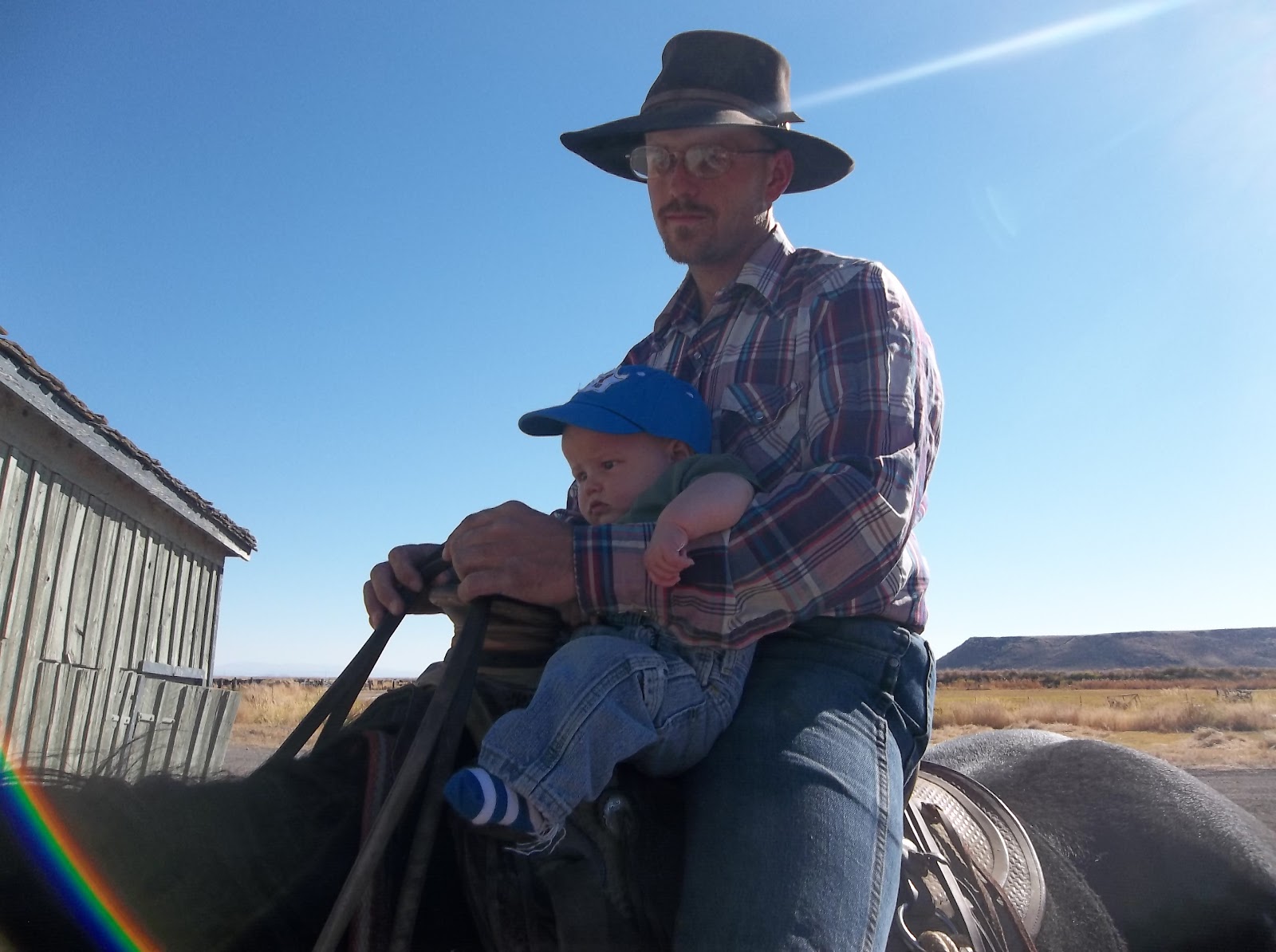
Jess use to ride on a daily basis when the couple lived in cow camp, but has recently hung up her spurs to be a full time mom to their 7 month old son, Quirt.

Outside of the normal day to day, Sam makes knives and braids rawhide. Jess is a nationally acclaimed cowboy poet and has started her own accessories line, The Buckarette Collection. 


A typical day for us is non-existent. You can walk out the door that day with a plan and have it all change. Sam can be on a horse, welding, putting out mineral, or any other number of things in a day. Jess can be on the road performing, running errands in town, training a dog or horse, or creating an original Buckarette Collection piece.

Jess gets to deal with a lot misconceptions and misunderstanding about cowboy life through her experiences as a cowboy poet. 

I (Jess) was talking to a group of grade schoolers in Durango, CO and you could hear them gasp as I explained that we only went town once a month. Walmart was 5 hours and was a once every couple of months trip.


Although we are no longer in cow camp, we had in the past lived 4 hours from town and had no cell service, no tv, there were times of the year that you couldn't get in or out. The idea that people are happy without technology and do this all for the sake of producing the nation's beef is unheard of. The remoteness and the lifestyle it takes to have a cheeseburger available when you hit the McDonald's drive thru is one of the biggest misconceptions.


You can learn more about Jess Hedges and her story by visiting her poetry website, her poetry Facebook page, and her Facebook page for the Buckarette Collection. She also has a personal Twitter account, and a Buckarette Collection twitter, as well as an Instagram

If you or someone you know is interested in sharing your story or agricultural experience, please contact us today! We are always looking for more features - YOU could be the next Face of Agriculture! 

Friday, December 21, 2012

Morgan Kontz - A First Generation Farm Wife

Today we welcome Morgan Kontz of South Dakota. Morgan is the author of the blog "First Generation Farm Wife." She is a great agvocate for agriculture - working hard to represent agriculture and promote conversation about food and farming.

Hi! My name is Morgan Kontz, a First Generation Farm Wife, from Eastern South Dakota. My husband and I farm in a partnership with his brothers, their wives, and my in laws. Between the three families we have 8 kids involved in the operation. Talk about a LARGE family farm!


(My husband, my daughter, and I at Mt. Rushmore. We went to a South Dakota Corn Board retreat...my husband is a Director on the South Dakota Corn Utilization Council)

We farm corn, soybeans, alfalfa, raise beef cattle, and run a beef feedlot. We stay quite busy year round- whether it’s in the fields, feeding cattle, working on equipment, or moving a ton of snow!

A typical day for me on the farm could include many things, or sometimes very little, depending on the time of year. This last harvest season I started my day getting our daughter ready for a day in the tractor and fixing meals for the day to feed the farm. Once I got to the farm I would typically spent the entire day in the tractor. Around bed time I would take our daughter home so our babysitter can get her settled for bed, and then I would be back in the tractor until the late hours of the evening- or the early hours of morning. However, you look at it!

During the non busy season things are a bit less busy for me around the farm. I spend a good chunk of my time during a month cleaning cattle water fountains and fencing with my husband every now and then. I also do bookwork, pay bills, and keep tabs on our breeding herd of cows- and those are just a few of the things I know need to get done. My schedule can vary depending on what my husband needs- whether it’s giving rides, watching gates, running for parts, or sometimes just having a family date in the tractor.  


(Cleaning cattle fountains- water source for animals)

(Filling salt and mineral tubs- supplements for our breeding cows)

Since we are involved in such a large operation sometimes being on the farm alone is very rare. The days where I get to spend with my husband just the two of us (well the three of us I should say..now with our daughter!) is probably one of my favorite parts. I wouldn’t trade being involved on a family operation for anything- but there is something about sharing what we both love when it’s just the two of us!

One of the unique things about our operation is how we split a lot of our duties. The women on the farm do the bookwork and split the responsibilities in the office. We also do a weekly rotation of cooking meals for the farm. Most of the year this includes the noon meal. During the busy seasons it includes two meals a day, delivered 
to the field. We also split our Sunday chores and holiday chores so that each guy has a chance to spend time with their families.


(Delivering supper to the field during harvest)

One of the things that I wish consumers understood about farmers is that many of us are family owned and operated businesses. 98% to be exact. I always get many shocking looks when I discuss that with various people at different events. I didn’t come from a farming background, although I grew up loving agriculture and made it one of my passions to educate others on agricultural production and practices in modern farming (I have a degree in Agricultural Education). I think looking back I would have been stunned to know that 98% of farms are family owned and operated, so it’s fun and enlightening for me to be able to share that with others.  

I am very involved in the industry and always have been in some way or the other since high school. When I met my husband and moved to South Dakota I became a first generation farm wife. Other than my time on the farm I am also a volunteer for CommonGround. The organization is sponsored by National Corn and United Soybean boards. Our main goal is to have a conversation about food, and of course farming! 


Being involved in the Ag industry outside of our farm is something my husband and I take very seriously, and something we both enjoy. Even if it’s just a simple conversation about small areas of farming it is so important that consumers feel confident and establish trust in farmers again! 


Years ago farmers would have never anticipated having to defend their livelihood. Today, I believe it is more important than ever as farmers and ranchers to share our stories in a positive light. Consumers need to feel safe in their food decisions and I believe their is no one more skilled in telling the story of America’s agriculture than us!

To read more about our family farm check out my blog:
www.sdfarmwife.blogspot.com

Have questions about Food? Check out the CommonGround site to meet other “experts” in agriculture!
www.findourcommonground.com
Thank you Morgan for a great feature!!! Keep up the great work!!! Be sure to check out her blog to learn more!  

You could be the next FOA! It's easy - just send an e-mail to foafeature@gmail.com to learn more! 

Monday, December 17, 2012

Liz and Adrian Brannan - Buckaroo Barbies

Today we feature two sisters from California. These girls work hard to promote western culture and ranching traditions. Please welcome Liz and Adrian of Buckaroo Barbie!

First of all, thank you for having us here at Faces of Agriculture!! We’re the Brannan sisters and we are best friends, business partners, dreamers, cowboy-girls and advocates of the cowboy/ranching world.

We were both born in Ventura, CA….in the land of the Vaqueros. But we were raised all over, NV, CA, Scotland, and MO…so it’s a little difficult for us to know where we’re from. Our dad was a saddle-maker turned cowboy turned international terrorism specialist, so our upbringing is really different than your typical cowboy or rancher.


Liz is the oldest at 25 and used to start colts for the public and braid rawhide, until she moved to Northeastern Nevada and became the first woman outside of family to cowboy on the Quarter Circle S Ranch, for the Van Normans. Getting the opportunity to work with and learn from some of the best cowboys out there was an amazing experience for her.Liz got chronic Lyme disease and eventually had to quit cowboying full time, and now lives with Adrian in Northern CA. Because of her health limitations, Liz focuses on other aspects of the cowboy world now. She and Adrian are partners and are writing a book called Buckaroo Barbie and Liz runs their blog, which you can check out at,www.buckaroobarbie.blogspot.com.


Adrian is the youngest at 20 and at the ripe old age of 14 was given the opportunity to make a CD. She now has 3 albums to her name, one of which was produced by her childhood hero, Tom Russell. Her latest album, Buckaroogirl, was released early this year, to the clamor of fans who had been eagerly awaiting its arrival. You can check her music out at www.buckaroogirl.com. She also has a blog, www.adrianbuckaroogirl.blogspot.com


Today, Adrian travels full time for her music and Liz works for her little sister as her Personal Assistant. We have the BEST working relationship…we are a team. Because of Adrian having a public platform to speak from because of her music, we are able to promote the western lifestyle in a different way. It’s always a fun experience when we’re traveling and someone stops and talks to us because of our hats, our boots, or Adrian’s guitar, and you can see their preconceived notions being challenged because of our lifestyle. It’s been really eye-opening for us to see just how many people really don’t understand where their food or beef actually comes from. Many of them are genuinely surprised that beef cattle are still raised on ranches in the United States, and cared for by real cowboys.


When we’re not on the road, we really just enjoy being home. Our folks rent the house on the ranch where we live now in Northern CA, and the ground is leased out for cattle. We ride our fat horses, maybe shoot a little and occasionally a neighbor needs some day work. Adrian especially needs time to cowboy in order for her to remain connected to this way of life and retain her sanity. Liz still tries to make time to braid rawhide and occasionally ropes at a neighbor’s branding.


We feel so blessed to have been able to grow up with the lifestyle that we did…as a cowboy’s kid there is no better feeling than getting to go to work with the “big guys”…and the practice of passing on information and traditions to the next generation is something we very much believe in, and want to continue in our own lives.


Thanks to Adrian and Liz for a great feature!! We wish you much success and keep up the great work! Be sure to check out the Buckaroo Barbie Blog and Facebook Page. You can learn more about Adrian's music on her blog and Facebook page.

Are you an advocate for you way of life? Are you passionate about ranching and farming? We need your story! Send Elizabeth or Jamie an e-mail at foafeature@gmail.com to learn how you can be the next FOA feature!

Friday, December 14, 2012

Abiqua Acres - A Family Dairy

Today we welcome Darleen of Abiqua Acres. This farming family is rich in history and tradition.


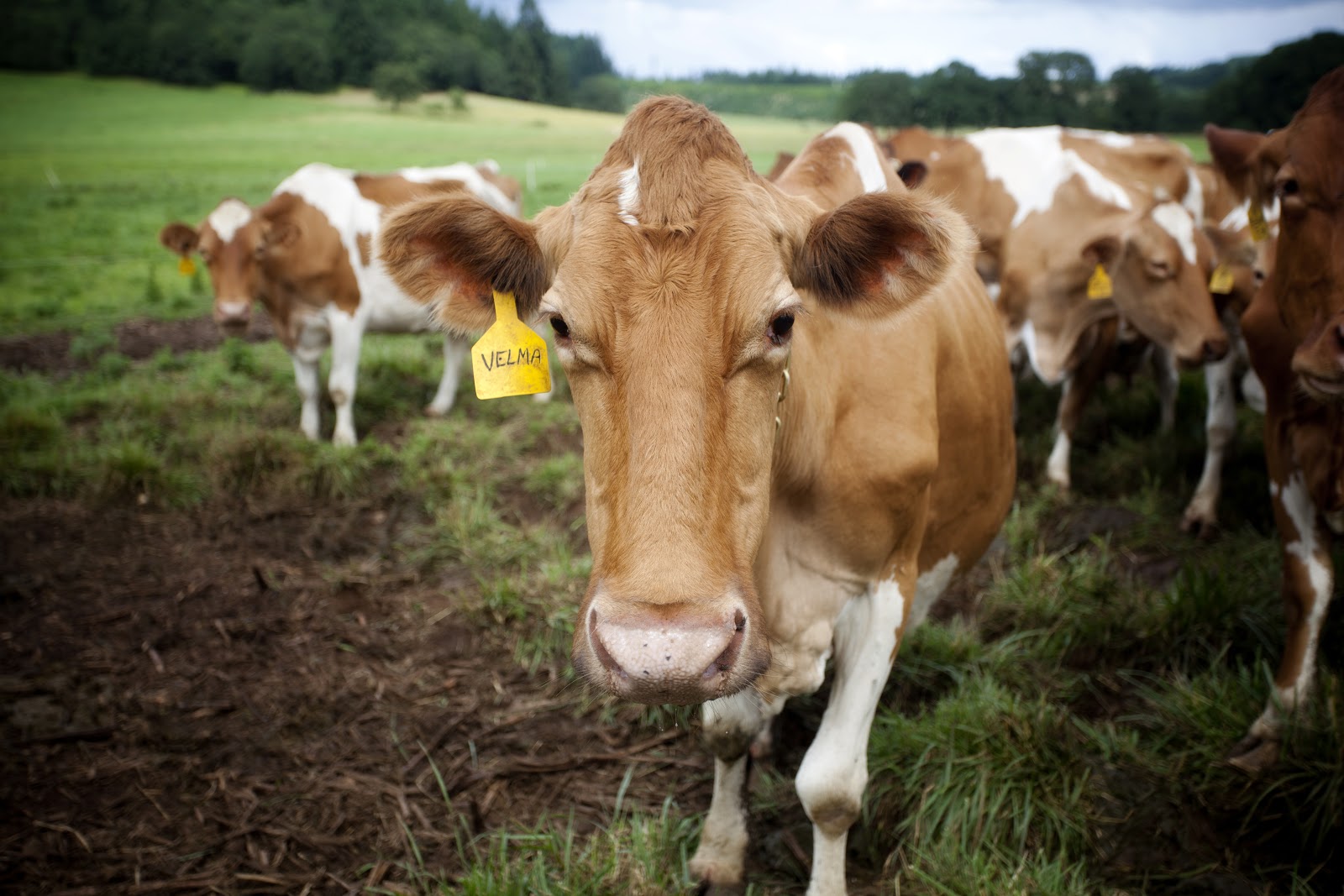
Situated in the foothills of Oregon’s Cascade Mountain range, Abiqua Acres is on the edge of the diverse Willamette Valley. The valley truly is an Eden for agricultural diversity, and I feel truly blessed to call this region home! Our 100 acre farm is home to one of the nation’s few 100% registered Guernsey herds. We milk about 85 cows and raise all of our replacements on the farm. The whole farm is rotationally grazed for as many months out the year as the Oregon weather will allow. There’s just something truly special about seeing our fawn and white Ladies out on pasture, that’s a sight I will never get tired of! Except for grass forage that is baled for the calves and heifers all other feed is purchased and brought onto the farm, so we are not farmers, just dairy farmers. That in itself is more then enough work for our family operated farm that consists of a work crew of myself, husband and my parents.


I am the 4th generation, 3rd generation dairy farmer, since our farm came into the family in 1938. It was purchased by my Grandmother’s parents so she would have a chance to attend High School. Although I was born and raised here and grew up with a love for dairy farming, this isn’t what I always thought I would end up doing. It’s a lifestyle choice and one I struggled with deciding on. I guess I could say that choice was helped along by my boyfriend at the time. Together we decided this was the life we wanted and have never looked back. We were married in 2007 and joined my parents as partners in 2008. While my husband grew up in the country, he was in no way a farmer and I am so proud to see him jump in completely with both feet to take on this occupation. While it is hard work, it truly is a labor of love and we enjoy seeing our success reflected in our Ladies and our family. Since home and work go hand in hand for this lifestyle, I find it hard separating the two, but that was a big reason we made this choice. And in 2011 when we had our son, this choice just makes even more sense for working and raising our children together.


Currently my typical day is dictated by my 20 month old micro-manager, and I will admit it has been a bit of an adjustment for me! I can honestly say I have had my hand in all aspects of the operation, but daily tasks now include calf care, cow feeding, manure management and clean up, as well as several milkings a week. With my parents still fully involved we are currently blessed to have weekends to spend with family and friends. Nap time during the day for my son has opened a window of time for myself to put a face to dairy farming. I am just starting this adventure in blogging and also starting to use our farm facebook page to reach out. I really feel there is a shift in the public to know where their food comes from, but still see a huge disconnect. Most people are at least several generations removed from any kind of farming, and information I take for granted is usually completely unknown to most. I am finding it fun and easy to share our story and hopefully educating a few people about dairy farming along the way. Right now on our facebook page we are celebrating 60 years with registered Guernseys and I am having a blast going through our family history.


This isn’t an easy lifestyle and there are definitely days I really wish I could just leave work at the office and have a break from my colleagues. But the family that works together stays together and I have found a deep respect and understanding for my husband and parents through these daily deeds. This everyday togetherness I feel brings a strength that makes the good times that much better and the bad times that much more bearable. One of my favorite things about the farm family is that we all sit down for lunch together, it’s a great chance to connect and just take a breather during the day. And how many people can say they have lunch with their family almost everyday of the week?!


I wish I could say there was a clear and obvious path for the future here on the farm, but much of that is out of our control and dictated by the milk prices. There are quite a few updates and remodel projects we would like to take on for better efficiency on our farm. Our top priority is always cow care and comfort, the Ladies come first. I wish people knew more about how much we truly care for our animals. We don’t take care of ourselves until all the animals are cared for, for the day. We also work with a great team to make sure we are providing the best. This includes a veterinary that is on call night and day as well as monthly herd checks. A nutritionist who helps us provide the best ration for our hard working Ladies. As well as a dedicated hay grower, and a hoof trimmer who gives our Ladies a wonderful pedicure! It’s a 365 days a year job, yes the cows need to be milked twice a day every day, even Christmas, but we will continue to work hard for the lifestyle we love. There is definitely a daily sense of accomplishment when I see that milk truck leaving and I know our best possible product is inside!


Thanks Darleen for a great feature!!! Please check out Abiqua Acres on Facebook and on their blog!

Your farm or ranch can be the next FOA feature - contact Jamie or Elizabeth at foafeature@gmail.com to learn more!

Friday, December 7, 2012

Missouri Beekeeping with Erin Mullins

Today we welcome Erin Mullins. Erin is a Missouri girl who discovered the joy of beekeeping!

Hello, my name is Erin Mullins and I’m from the northwest corner of Missouri. I am 19 years old attending college to become a Nurse. I still live at home with my parents on our farm of 10 acres nestled along a creek and surrounded on 3 sides by timber.My whole life we have had animals of all kinds on our farm such as goats, emus, buffalo, hedgehogs and now more recently we’ve added bees to that list. My dad has always been interested in animals that are not so domestic and has fortunately passed that gene down to me.

Every year in January and February the local technical school offers Personal Enrichment classes for people of every age to learn about all sorts of different things. They offer classes about computers, dog obedience, flying an airplane and many more. 3 years ago I found myself going to the class they offered for beginning beekeepers. Before that class the only things I knew about bees in general were that they made honey and they stung. My cousins from Iowa had hives but I had never been out to see them up close.

So off I go notebook in hand to learn about bees. When I showed up I realize that I’m the youngest person there by about 20 years and one of only a few women. I started to think maybe I was a little out of place. The class is taught by a group of about 5-6 men from a newly founded Northwest Missouri Bee Busters who have beekeeping experience ranging from about 5 years all the way up to 30+ years. By the end of the class I learned about the different parts of a hive, diseases a bee can get, and how to harvest your honey, but most importantly a hunger to learn more. I was absolutely fascinated. Lucky for me they offered another class in February that was more advanced and went into greater detail on beekeeping.

By March of that same year I got my first 3 hives of bees. Now something you need to know is that when you buy bees you buy a “package” or box of bees it exactly that, a box that contains 1 queen and about 10,000 worker bees. It’s very intimidating when you’re riding in a car for 2 hours and a few bees escape from those boxes and are flying around in the car with you. The queen comes separately in a little tiny box, inside the bigger box, with a piece of hard candy or a cork on the bottom. The purpose the queen is separated is because if you were to release her with the other bees she would just fly off because she has not become acquainted with the other bees. So you hang her and let the bees eat the cork out and get use to her as their queen. Then for the next 5-6 months during the spring and summer the bees work to fill boxes on top of their hives called supers with beautiful golden honey. We only take the supers we put on the hives and that the bees fill so that they can have a sufficient food supply to last them through winter.

This is what you get when you order a package or box of bees.
The first year I harvested my honey I entered it at the Missouri State Fair in the FFA division. I sent a quart jar to Sedalia not knowing exactly how they judged it or if my honey was even worth sending. I don’t know if it was beginners luck or what I had was truly gold, pun intended, because I ended up receiving Reserve Champion. This past year I sent my honey again and didn’t get grand or reserve but still received a gold ribbon which I’m very proud of.

My Reserve Champion Honey from the Missouri State Fair FFA division.
Today I am a member and amateur web designer for the Northwest Missouri Bee Busters. We meet once a month and have discussions on honey prices and diseases we should check for but mostly it’s just a place for people to ask questions and get every ones opinions on the matter. It’s been said that if you ask 2 beekeepers how to do one thing you’ll end up getting 3 different answers. But that’s the great thing about beekeeping is that someone is always there with advice and information. Then basically you just have to try the different things out on your own until you figure out what works best for your operation. As a club we put on the beekeeping classes at the tech school, set up a booth at the American Royal in Kansas City, MO for the school tours, and do other talks about bees around the community.

This is the booth our club had at the American Royal in Kansas City for the school tours.
We had honey sticks for the kids and an observation hive with live bees.
I am also a member of the Missouri State Beekeeping association who meet twice a year. At those meetings they bring in scientists, professors, and experienced beekeepers to give lectures on all sorts of beekeeping related matters. It’s a great place to learn and meet some very interesting people. This past year I had the privilege of getting to know the Missouri State Honey queen. I traveled with her and her mom to St. Louis for one of the state meetings and got to see her at work. It really sparked an interest with me. I’m hoping that next year I will be able to run for the queen position. They have the opportunity to promote beekeeping and agriculture in general to kids and adults all across Missouri and even Kansas.

Beekeeping is a wonderful hobby to have that comes with many great benefits. Not only do you have the opportunity to sell your honey, bees are very beneficial to agriculture. According to The New Agriculturalists in the United States alone bee pollination is valued at several billion dollars. Bees pollinate about 1/6th of the world’s flowering plants and over 400 agricultural species. So I strongly encourage people to get into beekeeping as a hobby because what you are doing just by keeping bees, you’re also helping American agriculture an out. Plus nothing tastes better or is better for you than fresh honey right from your backyard.

For more info about beekeeping here are a few websites you can go to:
www.northwestmissouribeebusters.com – My local clubs website.
www.mostatebeekeepers.org – The Missouri State Website
www.honey.com – The National Honey Board
www.abfnet.org –The American Beekeeping Federation

Thanks Erin for the great feature. You can follow Erin on her personal blog: Diaries from the Dirt Road.

How are you involved in agriculture? We want to hear your story! Send us an e-mail at foafeature@gmail.com and we can get you started writing a feature!