Today we welcome Emma of Misener Family Harvesters! This family follows the harvest from the Texas/Oklahoma border all the way to the North Dakota/Canadian border!
I woke up this morning in my smaller-than-average sized bed, to the wonderful sound of rain hitting the camper roof. Although it was a day of taking it easy, there are always those few things that can’t get themselves done. The trucks need to be dumped at the elevator, fueling and servicing still needs attention. This may be a nothing-to-do sort of day, but trust me. This day is nothing like a typical day on harvest. My name is Emma Misener and I am a custom harvester. I work with Misener Family Harvesters, Elk City, Okla., where I work for my mother, Kristy and along-side my brother Dan.
In 1971, my father, Ron, started Misener Family Harvesters after serving as an Army Sergeant in the Vietnam War. A few years later he was hired by a neighbor who had just moved to the area. It was that job where he met the farmer’s daughter and the rest became history. Dad and Mom built a family and business, and both thrived. They began traveling south to the Texas/Oklahoma border with combines harvesting wheat from one farm to the next, working their way north to the North Dakota/Canadian border. Once wheat harvest came to a close, fall harvest began and they worked their way back home harvesting as they went. Their tradition still lives on today.
I was born on the harvest trail, raised on the harvest trail, and still live on the harvest trail. I remember taking along my crayons and paper in the combine, riding with mom while harvesting. By the time I reached 10 years old, I had already began to beg Dad to let me drive the big machines, and by then I’m sure he was ready to at least let me try. My first field of wheat I combined was 3.75 acres and I still remember what he said. “You’re doing an excellent job, but it looks like you’re chasing a snake!” I just smiled and said, “I promise I’ll learn to drive straighter. Will you please let me have my own combine?” I’ve been driving big green machines since.
As the business grew the family did, too. I am the youngest of six children. My older sisters Marie, Katie, and Elizabeth and my brother David, soon left and started families of their own. To help fill their void Dad and Mom decided to hire help. By the time I was 15 years old I was training hired men. When interviewing potential employees, one of the questions he asked them was, “can you listen to a 15 year old girl?” They always chuckled thinking he was joking, but Dad was very serious about it.
Two years ago in December, my Dad passed away. His love and passion for harvesting still lives on today in my Mom, my brother Dan and I. Mom, Dan, and I continue his legacy harvesting the trail where it all began. Mom still does the cooking and the business, with Dan and I helping her through it all. Although it is harder to go on without him, we still have the motivation he passed down to keep us all moving forward.
We are in blistery and rainy South Dakota finishing up our fall harvest, combining corn.
Our day begins at 7:30 a.m. with breakfast, followed by a trip to the elevator with trucks filled the previous night, and then head out to the field. Mom usually packs a lunch for us to take in the morning, and once in a while she will surprise us with hot lunch. We arrive at the field, fuel up the combine, and service it by greasing the proper places, checking the oil, and then do a ‘walk-around’ checking belts/chains or anything else that seems out of the ordinary. Then the fun part begins. Once we start harvesting corn we go until the elevator closes, and then fill everything one more time for a morning trip. Once the trucks are full we head home, clean up, eat supper, and get to bed. There isn’t much time for anything other than harvesting.
I love our way of life. I love the smell of the crops, the dust in the air, and the sense of accomplishment when a field is harvested. It makes me want to do it all over again. I’m getting the itch to get back home to warmer Oklahoma, but in two months I’ll be itching to get back on the road.
Our stops on the road become home. Every place is different and has its own unique beauty. The people we hire, the people we cut for, and fellow custom harvesters become family. Even the people at the grocery stores or gas stations say ‘Hey! When did y’all get back in town? We’ve missed you!’
It can be stressful and a lot of hard work, but I wouldn’t choose any other way of life. The U.S. Custom Harvesters, Inc., go by the motto ‘we harvest the crops that feed the world’. This sums it up. I’m proud to be a custom harvester. We really do feed the world.
(L to R) Me, my brother Dan, my Dad Ron, and my Mom Kristy. This was the last family photograph before my Dad passed away. We were at the John Deere Fall Festival in Waterloo, Iowa celebrating antique tractors. My Dad loved restoring the ‘Ol’ Girls’ and went to every antique show we could go to.
We load our semis and move to our first stop on the harvest run. Most of the time we haul the combines because our stops from farm to farm are far enough away, that it’s cost efficient to haul them.
Other times, our farmers are closer together so we drive the combines from one farm to the next. It just depends on how far our farmers are from each other.
Cutting wheat in Oklahoma! We make rounds all day long in a clockwise motion so that we can always unload on-the-go.
We unload each combine one by one, then dump the grain into the waiting semis, where they then take it to the elevator.
My Dad was a very patriotic man; something that he has definitely passed on to me and the rest of my family. Every year, we put new American flags flying from each of our machines.
Every day of my life is a blessing. I love what I do and wouldn’t change a minute of it!
Thank you Emma and the folks from All Aboard Harvest for this great feature!!! If you’d like to follow along with Misener Family Harvesters during our summer harvest - visit www.allaboardharvest.com, or our Facebook page at www.facebook.com/MisenerFamilyHarvesters . You can reach Emma at emma@allaboardharvest.com.
YOU can be the next Face of Agriculture Feature - Contact us today!!
Friday, October 26, 2012
Wednesday, October 24, 2012
Snake River Produce Company
Today we hear from Tiffany Cruickshank of Snake River Produce Company. She is a fourth generation agriculturalist!
Snake River Produce Company, LLC is located in Nyssa, Oregon in the heart of the Idaho-Eastern Oregon onion region.
Snake River Produce is an onion packer and shipper – shipping red, white, and yellow onions from August to the end of March each year. Established in 1999, Snake River Produce was formerly owned and operated formerly by Muir-Roberts Co., Inc. headquartered in Salt Lake City, Utah. Muir-Roberts operated this facility for approximately 50 years and in 1999, four onion growers, Reid Saito, Ken Teramura, Les Ito, and Ross Nishihara, along with Kay Riley, former Vice President of Operations for Muir-Roberts purchased the assets and business from Muir-Roberts. Pat Takasugi, a local onion grower and Idaho State Representative joined the business in 2003 as a part owner and grower. Following his passing in 2011, Pat’s wife, Suzanne took over the farm and partnership in Snake River Produce.
I am a fourth generation agriculturalist working in Sales, Marketing, & Transportation for Snake River Produce Company, LLC. My great-grandfather Henry started farming after he moved to the United States from Germany. My grandfather Peter and father Michael continued the farming tradition and my father still farms today on the farm and ranch where I grew up. My husband Chad grew up on a row crop farm started by his grandfather and is now an agriculture instructor and FFA advisor at the local high school. Needless to say, we are entrenched in the agriculture industry and have deep-rooted traditions with our families.
We are a seasonal shipper – shipping onions from approximately the middle of August to the end of March year. During what we call our ‘busy season’, our days vary. Generally, we work in the office at the packing shed selling onions, arranging transportation via rail and truck, discussing the market with customers, taking care of paperwork, and any other project that comes our way. We also take care of the traceability aspect of our onions, check on the product being packed, and keep up with the day-to-day dealings of a business. That is a very broad view of the job, but we all wear a lot of hats and take on various jobs to make sure everything gets accomplished!

My favorite part of living on a farm and ranch – and working in the agricultural industry is the people and the culture. The individuals we deal with are the hardest working, most honest people you will meet. The integrity and determination that comes along with agriculturalists is unrivaled and I would not want to work with a different group of people.
Food safety and the perception by the public is definitely one of the biggest challenges we face. It seems as though there is some sort of fresh produce recall in the media regularly. Dry onions have never been the focus of a food safety issue and we go through tremendous effort to make our food safe. Dry bulb onions are at very low risk for food safety issues, however, they are still categorized with leafy greens in the USDA food safety classification. In a proactive move to keep ahead of new mandatory food safety and traceability measures, Snake River Produce uses a traceability program utilizing GPS and mock recall segments. AIB, a third-party auditor has given Snake River a superior rating for more than a year and the grower base for our facility is GAP-certified through the USDA. Another step we take is multi-level testing by Certified Onions, Inc. in coordination with the Oregon Department of Agriculture.
Thank you Tiffany for a great feature!! You can learn more about Snake River Produce Company by checking out their Facebook Page , their LinkedIn Profile and website or follow them on Pinterest for great onion Recipes!
You can be the next Faces of Agriculture Feature - send us an email at foafeature@gmail.com to learn how to get started!!
Snake River Produce Company, LLC is located in Nyssa, Oregon in the heart of the Idaho-Eastern Oregon onion region.
Snake River Produce is an onion packer and shipper – shipping red, white, and yellow onions from August to the end of March each year. Established in 1999, Snake River Produce was formerly owned and operated formerly by Muir-Roberts Co., Inc. headquartered in Salt Lake City, Utah. Muir-Roberts operated this facility for approximately 50 years and in 1999, four onion growers, Reid Saito, Ken Teramura, Les Ito, and Ross Nishihara, along with Kay Riley, former Vice President of Operations for Muir-Roberts purchased the assets and business from Muir-Roberts. Pat Takasugi, a local onion grower and Idaho State Representative joined the business in 2003 as a part owner and grower. Following his passing in 2011, Pat’s wife, Suzanne took over the farm and partnership in Snake River Produce.
| General Manager of our facility - Kay Riley & Tiffany Cruickshank |
I am a fourth generation agriculturalist working in Sales, Marketing, & Transportation for Snake River Produce Company, LLC. My great-grandfather Henry started farming after he moved to the United States from Germany. My grandfather Peter and father Michael continued the farming tradition and my father still farms today on the farm and ranch where I grew up. My husband Chad grew up on a row crop farm started by his grandfather and is now an agriculture instructor and FFA advisor at the local high school. Needless to say, we are entrenched in the agriculture industry and have deep-rooted traditions with our families.
We are a seasonal shipper – shipping onions from approximately the middle of August to the end of March year. During what we call our ‘busy season’, our days vary. Generally, we work in the office at the packing shed selling onions, arranging transportation via rail and truck, discussing the market with customers, taking care of paperwork, and any other project that comes our way. We also take care of the traceability aspect of our onions, check on the product being packed, and keep up with the day-to-day dealings of a business. That is a very broad view of the job, but we all wear a lot of hats and take on various jobs to make sure everything gets accomplished!

My favorite part of living on a farm and ranch – and working in the agricultural industry is the people and the culture. The individuals we deal with are the hardest working, most honest people you will meet. The integrity and determination that comes along with agriculturalists is unrivaled and I would not want to work with a different group of people.
Thank you Tiffany for a great feature!! You can learn more about Snake River Produce Company by checking out their Facebook Page , their LinkedIn Profile and website or follow them on Pinterest for great onion Recipes!
You can be the next Faces of Agriculture Feature - send us an email at foafeature@gmail.com to learn how to get started!!
Labels:
family farm,
FFA,
Idaho,
Onions,
Oregon,
produce,
ranch,
vegetables
Wednesday, October 17, 2012
Tricia Miller - Wyoming Ranch Wife and Entrepreneur
Today we welcome Tricia Miller of Wyoming! Tricia and her family live on a ranch raising Black Angus cattle. She enjoy's working on the ranch but has also has some special endeavors of her own.
My name is Tricia Miller. My family and I live on my husband’s family’s ranch in eastern Wyoming. We reside in Niobrara County, the least populated county in the least populated state in the nation and also an agriculture-based community with a small-town atmosphere, where everyone knows everyone and friends and neighbors are still happy and willing to help each other out, whether it’s working cattle or fighting fire.
My husband and I were both raised on ranches and wouldn’t trade the country life for the world. We’ve continued the tradition by raising our kids to appreciate the land and animals and the lifestyle that promotes responsibility and hard work ethics. The sport of rodeo is another part of the Miller heritage, and our older son, Colton (19), rides saddle broncs for Central Wyoming college, and our younger son, Blake (7), enjoys participating in local junior rodeos in the summer.
The Miller Ranch, established in 1951 by my father-in-law’s (Patrick) parents, is located outside of Lance Creek, Wyoming, and supports a Black Angus cow-calf operation, with Patrick and his two sons, Justen (my husband) and Jason, as the main operators, plus a full-time hired hand. To help support the cattle income, Jason continues a thriving career in rodeo (2007 Steer Wrestling World Champion), and although Justen was an accomplished saddle bronc rider for many years, he chose to leave rodeo to help his dad with the family’s booming business, Miller Enterprises, Inc., an oil field roustabout company.
As for myself, while I help out with ranching duties as needed, I also have other furry and feathery endeavors I pursue, such as rabbits, chickens, ducks, pigs, and a Brown Swiss milk cow. We have a couple of pet rabbits for Blake, a trio of meat rabbits, and one English Angora rabbit (Scooter), which produces a lovely fiber for spinning, another hobby I’ve recently taken up. We typically have around 80 chickens of varying breeds, such as Barred Rock, Rhode Island Red, Buff Orpington, Leghorns, and a few others. We buy them as chicks and raise them. I sell eggs to locals who enjoy farm fresh eggs, delivering in town every Tuesday afternoon. And just for fun, we have some White Crested and Khaki Campbell ducks around the yard, as well as a pair of Muscovy ducks, but we also use their eggs for baking as well. They’re quite entertaining to watch and fun to feed! We raised three pigs this summer, which was a first for me, and I thoroughly enjoyed them and would love to do that again.
Every morning when I return from taking Blake to the school bus, “Jewel” the milk cow is waiting for me to come milk her. She is quite possibly the sweetest cow you’ll ever meet and you won’t find better tasting milk and cream anywhere! She is giving about 4-1/2 gallons per day currently, but was up to 6 gallons a day for a while earlier this summer. I use the milk and cream to make wonderful butter and soft cheeses, such as cheese curds, cream cheese, mozzarella cheese, and others, and hard cheeses, such as cheddar. I also use it to make delicious sour cream, kefir, and buttermilk to drink.
A few years ago, after a conversation with my husband about the things our great grandparents knew how to do/make that we don’t anymore and have to depend on the grocery store for, I decided to learn to make soap. Little did I know what my curiosity would lead to! I found that making soap was really fun and so satisfying to make something with your hands for your family that was better than what we could get in the grocery store! After giving it to friends and family with lots of positive feedback and encouragement to sell it to the public, I also started Miller Soap Co. a few years ago, a handmade soap hobby that blossomed into a successful business that has enabled me to work out of our home. I have a business page on Facebook (www.facebook.com/millersoapco) for online customers, have soap in a few stores around eastern Wyoming, and also attend craft shows.
The country life is definitely not the easy life. The animals and land require a lot of tending, and it doesn’t matter what the weather is, and in Wyoming, that can be anywhere from -30 degrees in the winter to 100+ degrees in the summertime, most of the time with wind. The hours can be long and the critters don’t always cooperate to make the job easy. It’s a long drive to town for groceries and kids’ school and 4-H activities, and the gas prices put limits on trips to town. But overall, there is something special about living hand-in-hand with nature on the wide-open spaces and having the freedom that comes with a little control over your own schedule. It’s not a get-rich-quick scheme, but it’s an extremely satisfying experience. It may not be the life for everyone, but it is most definitely for our family!
Thank you Tricia for a great feature!!! We wish you much success in your soap making business!! Be sure to check out their Facebook page to check all of her homemade products!!
YOU could be the next Faces of Agriculture feature! Contact us at foafeature@gmail.com to learn more! We are telling the story of agriculture one face at a time!
My name is Tricia Miller. My family and I live on my husband’s family’s ranch in eastern Wyoming. We reside in Niobrara County, the least populated county in the least populated state in the nation and also an agriculture-based community with a small-town atmosphere, where everyone knows everyone and friends and neighbors are still happy and willing to help each other out, whether it’s working cattle or fighting fire.
| Milking "Jewel" the cow |
My husband and I were both raised on ranches and wouldn’t trade the country life for the world. We’ve continued the tradition by raising our kids to appreciate the land and animals and the lifestyle that promotes responsibility and hard work ethics. The sport of rodeo is another part of the Miller heritage, and our older son, Colton (19), rides saddle broncs for Central Wyoming college, and our younger son, Blake (7), enjoys participating in local junior rodeos in the summer.
The Miller Ranch, established in 1951 by my father-in-law’s (Patrick) parents, is located outside of Lance Creek, Wyoming, and supports a Black Angus cow-calf operation, with Patrick and his two sons, Justen (my husband) and Jason, as the main operators, plus a full-time hired hand. To help support the cattle income, Jason continues a thriving career in rodeo (2007 Steer Wrestling World Champion), and although Justen was an accomplished saddle bronc rider for many years, he chose to leave rodeo to help his dad with the family’s booming business, Miller Enterprises, Inc., an oil field roustabout company.
As for myself, while I help out with ranching duties as needed, I also have other furry and feathery endeavors I pursue, such as rabbits, chickens, ducks, pigs, and a Brown Swiss milk cow. We have a couple of pet rabbits for Blake, a trio of meat rabbits, and one English Angora rabbit (Scooter), which produces a lovely fiber for spinning, another hobby I’ve recently taken up. We typically have around 80 chickens of varying breeds, such as Barred Rock, Rhode Island Red, Buff Orpington, Leghorns, and a few others. We buy them as chicks and raise them. I sell eggs to locals who enjoy farm fresh eggs, delivering in town every Tuesday afternoon. And just for fun, we have some White Crested and Khaki Campbell ducks around the yard, as well as a pair of Muscovy ducks, but we also use their eggs for baking as well. They’re quite entertaining to watch and fun to feed! We raised three pigs this summer, which was a first for me, and I thoroughly enjoyed them and would love to do that again.
| Gathering eggs |
| Making mozzarella cheese! |
| Photo courtesy to the Lusk Herald |
Thank you Tricia for a great feature!!! We wish you much success in your soap making business!! Be sure to check out their Facebook page to check all of her homemade products!!
YOU could be the next Faces of Agriculture feature! Contact us at foafeature@gmail.com to learn more! We are telling the story of agriculture one face at a time!
Monday, October 8, 2012
Millikan Family of Missouri
Today we welcome another great feature from Brittni Drennan of the International Brangus Breeders Association. The Millikan family of Missouri!
The Millikan family is sure about one thing- they love everything about their Brangus cattle and have a passion for the lifestyle they lead. In 1981 Homer and Carolyn Millikan, currently the owners of HC Brangus in Sedgewickville, Mo., had been raising registered Angus cattle when they bought a three-quarter Brangus bull and made the decision to introduce Brangus genetics into their breeding program.
Homer had been custom fitting show cattle and Carolyn was active in the show circuit when the couple, now married 51 years, initially met in Sedgewickville as young sixteen-year-olds. Homer admits it was his wife who convinced him to get involved in seedstock production, but it was Roy Meyer, Carolyn’s uncle, who taught him the ropes. Making a living strictly in the cattle business, Homer said you have to know what you are doing and know what you are selling.
“I’m trying to breed good, sound cattle,” Homer said. “I try to be consistent, and I breed cattle that are born small and gain weight before weaning time and perform on minimum feed. They have a lot of bone, rear end and rib eye area because it puts more thickness, depth and more length to your cattle; if you have a long, heavy-boned animal, they’ll put on more pounds.”
Carolyn said their steers qualify for value added programs like Certified Angus Beef (CAB) and grade Choice on the grading scale. She compliments Brangus for being efficient, adaptable to their environment and more profitable because they weigh heavier at weaning.
“Our Brangus calves weighed 100 pounds more at weaning than Angus, grew bigger on less feed and can take the cold as well as they can the hot,” Carolyn said.
“They’re out grazing and not standing in the pond when it’s hot,” Homer agreed, “and they will eat a lot rougher forage than any other cow I know of. They can pick the blooms out of thistles and never get a sticker.”
Aside from the Brangus breed’s advantageous qualities, Homer places emphasis on smart management techniques to make the business successful. He knows everything there is to know about his cattle. He weighs them each month after weaning, he knows what they are eating, how much feed they get and exactly how much feed cost per pound.
“You’ve got to know your input cost and if it’s worth it to keep them on feed,” Homer said. “If they’re not gaining weight, you have to get rid of them, but we have very few that won’t gain like they should.”
Knowing their product and having specific goals for their breeding program is what has enabled Homer to easily market his cattle and build a positive reputation with his customers, some of which have been buying HC Brangus cattle for 15 years.
The Millikans utilize some of the latest technologies to be more efficient. Homer uses Expected Progeny Differences (EPDs) to compare birth weight (BW) and rib eye area (REA) between two animals. The Millikans also utilize artificial insemination (AI) techniques to gain more access to other bloodlines, which their daughter, Bobbi Welker, oversees.
“We have daughters from our herd bull, and AI’ing gives us more options,” Welker said. “My daughter wanted to get into the club calf sires. We crossed the Maintainer bull with some of our Brangus heifers and got some nice looking heifer calves.”
Helping her mom and dad with the family business is a lifestyle Welker and her family appreciates and enjoys. She said it gives her an opportunity to teach her daughter, Samantha, important life lessons and how to be self-sufficient. Moreover, she said she could spend hours just watching the cows and calves; it is a peaceful place someone can go to get away from life’s demands and busy schedule.
“It’s great to have your family together and working together,” Welker said. “It’s a lot of work, but when you’re working together it can be a lot of fun.”
Thank you Brittni for another great feature! If you have questions about Brangus genetics or want more information, contact the International Brangus Breeders Association (IBBA) at 210-696-8231 or visit www.gobrangus.com to find a Brangus breeder near you. Don't forget to read the Beef Tips Blog and like them on Facebook.
YOU could be the next FOA feature! No need to have a blog! Contact us today to learn how to be a feature!
The Millikan family is sure about one thing- they love everything about their Brangus cattle and have a passion for the lifestyle they lead. In 1981 Homer and Carolyn Millikan, currently the owners of HC Brangus in Sedgewickville, Mo., had been raising registered Angus cattle when they bought a three-quarter Brangus bull and made the decision to introduce Brangus genetics into their breeding program.
Homer had been custom fitting show cattle and Carolyn was active in the show circuit when the couple, now married 51 years, initially met in Sedgewickville as young sixteen-year-olds. Homer admits it was his wife who convinced him to get involved in seedstock production, but it was Roy Meyer, Carolyn’s uncle, who taught him the ropes. Making a living strictly in the cattle business, Homer said you have to know what you are doing and know what you are selling.
“I’m trying to breed good, sound cattle,” Homer said. “I try to be consistent, and I breed cattle that are born small and gain weight before weaning time and perform on minimum feed. They have a lot of bone, rear end and rib eye area because it puts more thickness, depth and more length to your cattle; if you have a long, heavy-boned animal, they’ll put on more pounds.”
Carolyn said their steers qualify for value added programs like Certified Angus Beef (CAB) and grade Choice on the grading scale. She compliments Brangus for being efficient, adaptable to their environment and more profitable because they weigh heavier at weaning.
“Our Brangus calves weighed 100 pounds more at weaning than Angus, grew bigger on less feed and can take the cold as well as they can the hot,” Carolyn said.
“They’re out grazing and not standing in the pond when it’s hot,” Homer agreed, “and they will eat a lot rougher forage than any other cow I know of. They can pick the blooms out of thistles and never get a sticker.”
Aside from the Brangus breed’s advantageous qualities, Homer places emphasis on smart management techniques to make the business successful. He knows everything there is to know about his cattle. He weighs them each month after weaning, he knows what they are eating, how much feed they get and exactly how much feed cost per pound.
“You’ve got to know your input cost and if it’s worth it to keep them on feed,” Homer said. “If they’re not gaining weight, you have to get rid of them, but we have very few that won’t gain like they should.”
Knowing their product and having specific goals for their breeding program is what has enabled Homer to easily market his cattle and build a positive reputation with his customers, some of which have been buying HC Brangus cattle for 15 years.
The Millikans utilize some of the latest technologies to be more efficient. Homer uses Expected Progeny Differences (EPDs) to compare birth weight (BW) and rib eye area (REA) between two animals. The Millikans also utilize artificial insemination (AI) techniques to gain more access to other bloodlines, which their daughter, Bobbi Welker, oversees.
“We have daughters from our herd bull, and AI’ing gives us more options,” Welker said. “My daughter wanted to get into the club calf sires. We crossed the Maintainer bull with some of our Brangus heifers and got some nice looking heifer calves.”
Helping her mom and dad with the family business is a lifestyle Welker and her family appreciates and enjoys. She said it gives her an opportunity to teach her daughter, Samantha, important life lessons and how to be self-sufficient. Moreover, she said she could spend hours just watching the cows and calves; it is a peaceful place someone can go to get away from life’s demands and busy schedule.
“It’s great to have your family together and working together,” Welker said. “It’s a lot of work, but when you’re working together it can be a lot of fun.”
Thank you Brittni for another great feature! If you have questions about Brangus genetics or want more information, contact the International Brangus Breeders Association (IBBA) at 210-696-8231 or visit www.gobrangus.com to find a Brangus breeder near you. Don't forget to read the Beef Tips Blog and like them on Facebook.
YOU could be the next FOA feature! No need to have a blog! Contact us today to learn how to be a feature!
Labels:
Brangus,
family farm,
Missouri
Friday, October 5, 2012
Jenkins Ranch since 1888
Today we welcome Jennifer Jenkins of Southern Alberta Canada!!
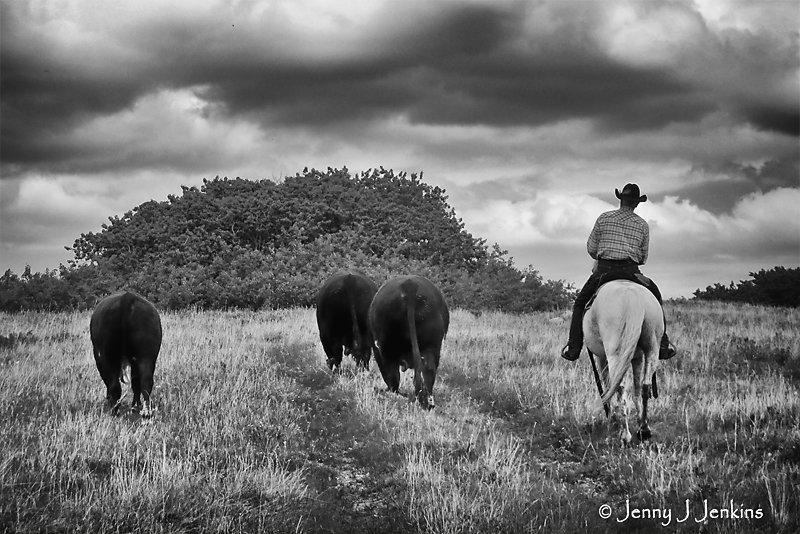
Hi Everyone! I feel so grateful to be a part of our awesome agriculture community that is showcased here on Faces of Agriculture. My name is Jen Jenkins and primarily I am a rancher living in Southern Alberta, Canada.
My family came to this area in 1888 and developed a ranch here raising horses and sheep. Over the years and now 5 generations later we are still living on the same land. Currently I ranch here with my father, Bob, where we raise both purebred and commercial Hereford Cattle calving approximately 300 cows each spring.
I have always loved ranching and the many rewards that come with this lifestyle. From an early age we were encouraged to have a great appreciation for Mother Nature and the land which sustains us which is something that is still very important to me. We are very lucky to live in an amazing part of the country, with a diverse population of plants and wildlife.
Raising cattle is one of my true life passions. Never content to just “own cows”, I am always working toward creating a more profitable, efficient animal that meets the demands of today’s livestock industry. Equally important to me are those people who are connected to the agriculture industry.
I see in others who make their living from the land so much passion, pride and care for their product and what it is that they do. There is a certain amount of negative media around our food production systems and I often wish that those people who eat the food we produce could experience this way of living for themselves.
My love for those people involved in agriculture has provided me with new opportunities through the Green Hectares and FarmOn Foundation where I am now working as an online business facilitator for farmers and rural communities. Working from home in this role has allowed me to give back to the agricultural community who has offered me so much encouragement and support throughout the years. As a facilitator I am available to listen to your goals, dreams or even your challenges and help you utilize the resources which will make your business successful.
Ranching today has a number challenges but I also believe that it has tremendous rewards and I strongly believe in providing future generations the same opportunities that I have had in this business. I thank everyone who has also chosen to share a bit of their story here at Faces of Agriculture, through these story’s we are all helping protect the future of agriculture.
As I read through the various pages here, there is no doubt that we are all connected regardless of our location, occupation or age and I look forward to reading more from others here at Faces of Agriculture! Happy Trails -Jen Jenkins
Thank you Jennifer for a great feature and great work that you do! We encourage you to visit the websites Green Hectares and FarmOn to learn more about other farmers and ranchers. You can also learn more about the Jenkins Ranch on their website and Facebook page. Jennifer also has this great interview on Youtube.
Do you come from a long line of farmers and ranchers? We would love to share your story! Contact us today!!!!
Hi Everyone! I feel so grateful to be a part of our awesome agriculture community that is showcased here on Faces of Agriculture. My name is Jen Jenkins and primarily I am a rancher living in Southern Alberta, Canada.
My family came to this area in 1888 and developed a ranch here raising horses and sheep. Over the years and now 5 generations later we are still living on the same land. Currently I ranch here with my father, Bob, where we raise both purebred and commercial Hereford Cattle calving approximately 300 cows each spring.
I have always loved ranching and the many rewards that come with this lifestyle. From an early age we were encouraged to have a great appreciation for Mother Nature and the land which sustains us which is something that is still very important to me. We are very lucky to live in an amazing part of the country, with a diverse population of plants and wildlife.
Raising cattle is one of my true life passions. Never content to just “own cows”, I am always working toward creating a more profitable, efficient animal that meets the demands of today’s livestock industry. Equally important to me are those people who are connected to the agriculture industry.
![]() |
| check out Jennifer's youtube interview here! |
My love for those people involved in agriculture has provided me with new opportunities through the Green Hectares and FarmOn Foundation where I am now working as an online business facilitator for farmers and rural communities. Working from home in this role has allowed me to give back to the agricultural community who has offered me so much encouragement and support throughout the years. As a facilitator I am available to listen to your goals, dreams or even your challenges and help you utilize the resources which will make your business successful.
Ranching today has a number challenges but I also believe that it has tremendous rewards and I strongly believe in providing future generations the same opportunities that I have had in this business. I thank everyone who has also chosen to share a bit of their story here at Faces of Agriculture, through these story’s we are all helping protect the future of agriculture.
As I read through the various pages here, there is no doubt that we are all connected regardless of our location, occupation or age and I look forward to reading more from others here at Faces of Agriculture! Happy Trails -Jen Jenkins
Thank you Jennifer for a great feature and great work that you do! We encourage you to visit the websites Green Hectares and FarmOn to learn more about other farmers and ranchers. You can also learn more about the Jenkins Ranch on their website and Facebook page. Jennifer also has this great interview on Youtube.
Do you come from a long line of farmers and ranchers? We would love to share your story! Contact us today!!!!
Wednesday, October 3, 2012
Standing Oaks Enterprise - Family & Agriculture
Today we welcome Sam Wildman as he tells us about his family farm - Standing Oak Enterprises - and how his family works together and advocates for agriculture and swine production.
My name is Sam Wildman, I am 21 years old - studying agribusiness & economics with a minor in agriculture communications at The Ohio State University. I represent over 200 years of agricultural tradition on essentially the same farm as we started on. I am the second of four children (Kim, Mindy, Simon & I) and represent the eighth generation to be involved with our farm which now raises pigs, corn and soybeans.
Our farm, located in South Charleston, OH, an hour west of Columbus and only an hour and 15 minutes north of Cincinnati puts us near the extreme edge of the corn belt. We are also only one hour north of where the glaciers pass stops and where the rolling hills of southern Ohio begin.
We raise 650 sows (mommy pigs) which produce roughly 18,000 pigs for market every year. The pig business is our livelihood and the grain we raise is specifically to offset some of our feed costs. On 700 acres we are able to raise enough grain to feed our herd for about half a year.
My dad, Charles Wildman is the owner & primary caretaker of our farm. He oversees daily care of our pigs which includes nutrition, health, breeding, birthing & weaning baby pigs. We have a few employees (including myself and my older sister) who help with daily care whenever he needs us. We then have six finishing barns located in other parts of the state, owned by other farm families who raise our pigs from the time they leave the nursery (45 lbs.) until the time they are harvested (263 lbs.).
Dad holds a seat on the Ohio Pork Producers board of directors, National Pork Board’s swine welfare committee, and is very involved in other advocacy programs with these two groups. Dad and I have become very involved in promoting agriculture, especially pork through social media outlets such as blogging, twitter & facebook. Transparency is something that we see is very beneficial for the relationship between agriculture and the consumers who buy our products.
We are in the process of becoming a partner in what is probably the most exciting thing to happen in the pork industry. We will be getting out of the sow and birthing business this winter and converting to a wean to finish farm where we will raise around 25,000 pigs a year for market in our nurseries and then in our finishers I spoke of earlier. The exciting part is that as we move towards more transparency in the industry we must do things to show others how we raise pigs on a commercial farm. This will be happening in Indiana at Fair Oaks Farms as well as on our farm. I encourage you to read more about it here.
My whole family has been raised with a strong Christian faith. My mom, Carol plays the piano every Sunday at church and is the praise band coordinator. My father is also involved at church as the finance elder and all of us kids are involved in different activities with the church.
The most important thing I have learned from my parents and my involvement in agriculture as I grow is to simply be yourself, remain true to your beliefs and stand firm for what you are passionate for. In my life, that is God & agriculture.
If you enjoyed this feature and want to know more about us or have questions about anything please look us up and ask us. You can find more about us here - Sam's blog, Charles' blog, Carol's blog, Sam's twitter, Charles' twitter or on Facebook.
Thanks Sam for the fantastic feature! Young people like Sam are the future of agriculture and we are thanksful to be able to share their stories. Be sure to check out the Wildman family blogs, twitter accounts, and Facebook page.
If you or someone you know should be featured on Faces of Agriculture, please contact us - we need your story now!
Labels:
business owner,
crops,
family,
family farm,
Midwest,
Ohio,
pigs,
student,
swine
Monday, October 1, 2012
Midwest Farm Girl - Katlyn Rumbold
Welcome Katlyn Rumbold - farm girl, cattle & poultry producer, young professional and ag advocate.
I often find myself repeating the phrase “my life could so easily be a country song!” So many of these songs capture exactly what it means to grow up in the country. I grew up on a diversified livestock farm in central Illinois in a tiny town called Wyanet. If it wasn’t for the faith, blood, sweat, tears, laughter, and friends I have encountered along the way I would not be the person I am today, advocating for agriculture. My absolute favorite part of growing up on the farm is the sense of pride you get when sitting down with the family to a dinner of homegrown, fresh produce and meat. There is just something about knowing all food on the table came straight from the backyard or the barn. And of course the wide-open spaces associated with country living are pretty cool too.
We raise poultry and beef cattle. What started out as a hobby quickly turned into a small, profitable business. It all started with an idea to raise enough chicken for my family of five to consume within one year. As we got going, people in the community approached us and wanted to purchase our chicken for their own consumption. Eventually, health food stores began carrying our product, and today we sell wholesale. Known as Famous T’s Chicken, we now raise 900 birds a summer compared to peak production when we raised 2000 birds. The chicks are delivered by mail, and then we teach them how to drink by dipping their beaks in water. After eight weeks, we load them on the trailer and head four hours south to the butchering plant. Waking up way before the sun comes up on butchering day is a downfall, but once they are at the plant, we get to enjoy the day eating, shopping, and napping in the park. I must say, chicken chores are my least favorite task on our farm, but they do make a tasty meal especially when cooked on the grill.
Everything I have learned on the farm has helped me get to where I am at today as a young professional. I was able to utilize my upbringing and spend a summer working as a farm radio broadcaster as well as spending some time in Colorado teaching horseback riding lessons. Currently, my job has taken me off the farm, although I am still connected as I write content for agricultural websites. I have learned that not everything goes according to plan, but sometimes it is when you think everything is falling apart that something awesome happens. It will be exciting to see how what I do today, both on and off the farm, will impact the rest of my life.
Thanks Katlyn for the great feature! You can follow along with Katlyn on her blog, facebook page, twitter account and on pinterest.
If you or someone you know should be our next "Face of Agriculture", please contact us! We need your story today!
I often find myself repeating the phrase “my life could so easily be a country song!” So many of these songs capture exactly what it means to grow up in the country. I grew up on a diversified livestock farm in central Illinois in a tiny town called Wyanet. If it wasn’t for the faith, blood, sweat, tears, laughter, and friends I have encountered along the way I would not be the person I am today, advocating for agriculture. My absolute favorite part of growing up on the farm is the sense of pride you get when sitting down with the family to a dinner of homegrown, fresh produce and meat. There is just something about knowing all food on the table came straight from the backyard or the barn. And of course the wide-open spaces associated with country living are pretty cool too.
![]() |
| Katlyn with a show heifer |
![]() |
| How the chicks arrive in the mail |
![]() |
| Dipping the chicks beaks in water teaches them how to drink |
A few years later we added beef cattle to the mix. This is where my passion truly lies. It is a lot of work, but very rewarding. Known as Green Acre Cattle Co, my family likes to joke that our summer vacations are all the cattle shows we attend where most people would find themselves vacationing on the beach instead. It truly is. We get so excited to see the hard work pay off in the show ring, and the people you meet in the barn quickly become life long friends. Even though my brother and I are too old to show in the junior shows, we still work with the show heifers and attend every show with our little sister. It has turned into a family affair as we all have our assigned jobs. Between the washing, grooming, training, and feeding, there is enough to do to keep all five of us busy. For me personally, I cannot think of a single activity that brings an entire family together like that of owning and operating a cattle business.
![]() |
| Katlyn's brother fitting a calf on show day |
![]() |
| Katlyn's sister at the Illinois state fair |
Thanks Katlyn for the great feature! You can follow along with Katlyn on her blog, facebook page, twitter account and on pinterest.
If you or someone you know should be our next "Face of Agriculture", please contact us! We need your story today!
Labels:
agvocate,
beef,
business owner,
cattle,
chicken,
family,
family farm,
Midwest,
poultry,
show calves
Subscribe to:
Posts (Atom)